How to Trade Gold (XAU/USD) During High-Impact News
Trading gold around high impact news events is genuinely dangerous if you don’t have a system. Intraday swings of $150 or more are routine in volatile periods. Fed decisions can wipe a leveraged position in seconds, and the old rules simply don’t apply in a market that can fall 17% in eight days and then bounce hard. These three technical rules, backed by real market professionals, are what separate accounts that survive news events from the ones that don’t.
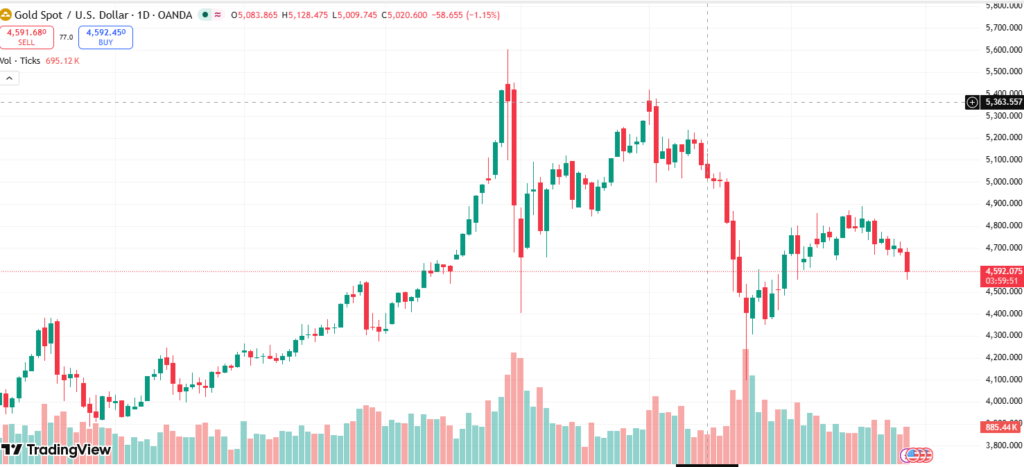
Gold has shown it can hit record highs and then crash 20% in under five weeks. We’ve seen XAU/USD spike to $5,437 and fall to $4,330 within the same quarter. That’s not a market for guessing. That’s a market for rules.
The Gold Market Is Not What You Think Anymore
Here’s the thing. Gold in 2026 is caught between three competing forces that don’t resolve cleanly. On one side, you have JPMorgan’s bullish targets and continued central bank buying across Malaysia, South Korea, and China. On the other side, geopolitical crises like the Strait of Hormuz situation have pushed oil above $108 barrel at times, reignited inflation fears, and made the Fed stay hawkish, which is historically bearish for non-yielding gold. And somewhere in the middle, you have the US Dollar strengthening as a safe haven while gold simultaneously tries to play that same role.
I find this genuinely confusing, honestly. Gold is supposed to go up when geopolitics gets messy. But when the geopolitical mess causes oil shocks and kills rate-cut expectations, gold gets sold. That’s the paradox traders need to understand before they look at a single chart pattern.
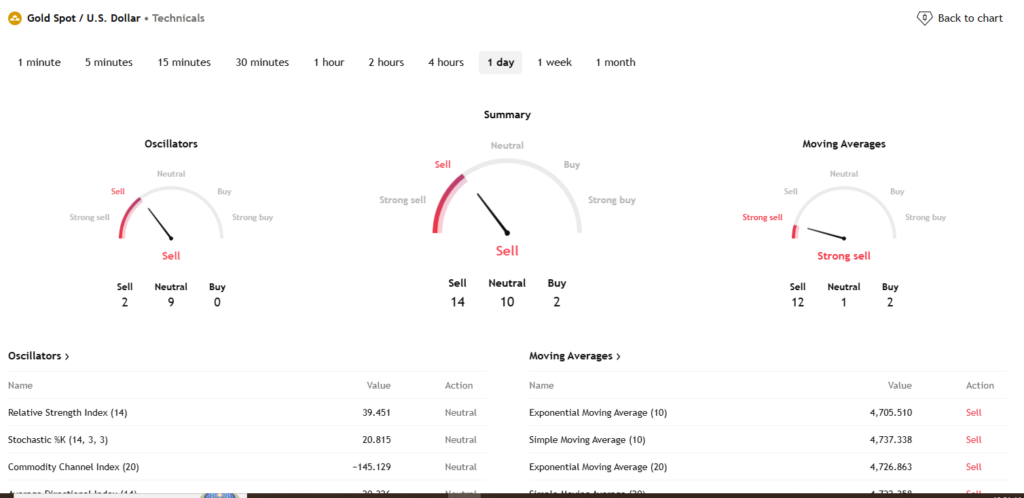
When gold enters these sideways consolidation phases, it often gets trapped below its key moving averages with RSI sitting near 40. FXStreet and TradingView analysts have documented this pattern repeatedly around Fed decisions and CPI events. That’s not a trending market. That’s a coiled spring.
So what do you actually do with that information?
Rule 1: Check the Options-Implied Move Before You Touch a Position
This is the rule most retail traders skip entirely. And it’s arguably the most important one.
Before any Fed decision, CPI print, or NFP release, the XAU/USD options market prices in an expected move range. According to Aigars Pilmanis, founder of VolRadar and one of the sharper volatility analysts I’ve come across, that implied range for tier-1 events typically runs between plus or minus $15 to $30. For context, that’s the expected move. The actual first-candle move often overshoots it.
Think about what that means for your stop loss. If you’re running a $5-wide stop into a Fed decision, you’re not trading. You’re flipping a coin and paying spread for the privilege.
Pilmanis’s rule is blunt: cut position size to 25–30% of your normal size before any major data release. Don’t predict direction. Wait for the initial spike to exhaust, then trade the reversion. His reasoning is that gold “almost always overshoots the implied move on the first candle, then reverts.” The reversion trade is cleaner because you’re reacting to confirmed price behavior, not guessing at macro outcomes.
There’s a secondary piece to this that’s worth understanding. Implied volatility in gold spikes hard into news events, then collapses immediately after. Buying options right before the event is expensive, because you’re paying for that inflated volatility premium. Fading the spike by selling after the first 15 minutes is, historically, the better side of that trade.
My take: if you can’t check implied volatility before a news event, you probably shouldn’t be trading through that event at all. That’s not a knock. It’s just risk management math. Track live XAU/USD technical levels through the Bitfluxe gold price tools to stay calibrated on current support and resistance before you look at the options data.
─┘
Rule 2: Set Your Orders Before the News Drops. Then Step Away
Scott Bates, Chief Technology Officer at Reputation Defense Networks, puts it in terms that non-traders can immediately understand: trying to manage a live position mid-spike is like doing PR damage control after a story already goes viral. You’re always behind. The market moves faster than your reaction time, faster than your emotional processing, and faster than your internet connection if you’re trading from anywhere with latency.
His rule: identify key support and resistance on the 1-hour chart before the news drops. Set your orders: entry, stop loss, take profit. When the event hits, step away from the screen completely.
I used to think this was overly rigid. I don’t anymore.
When geopolitical escalations hit and gold drops 17% in eight sessions, the traders who had pre-set stops and walked away lose a controlled amount. The traders who “managed” their positions in real time, moved stops, added to losing positions, or froze entirely. Many of them blow accounts. CME Group data has shown rate cut probability collapsing from three expected cuts to near zero in single volatile weeks. That’s a macro shift that no active screen-watching helps you navigate in real time.
Pre-positioning isn’t passive. It’s disciplined. Calculate your risk-adjusted position size using the Bitcoin and Crypto Profit Calculator on Bitfluxe to build the habit of quantifying risk before any trade, not just crypto. The mental framework applies to gold equally.
The traders who survive brutal news events all have one thing in common: a plan set before the chaos started.
Right. Now for the most technical of the three rules.
Rule 3: Wait for the 15-Minute Market Structure Shift
Don’t catch the first wick. Ever.
Sovic Chakrabarti, Director at Icy Tales and a trader who focuses on price action methodology, calls this the “15-Minute Structural Shift” rule, and it’s the one I think most intermediate traders are missing. The concept is simple but requires patience that most people don’t have.
When high-impact news drops: NFP, CPI, Fed decision. the immediate price move is almost never the real move. It’s a stop hunt. The market clears liquidity on both sides of the pre-news range before committing to direction. This is especially true in today’s market, where gold’s intraday ATR has expanded dramatically due to geopolitical volatility and persistent inflation data surprises.
Here’s the actual process: after the news hits, let the initial spike and counter-spike play out on the 1-minute or 5-minute chart. What you’re waiting for is the price to form a clear swing high and swing low on those short timeframes. Then you watch the 15-minute chart for a Market Structure Shift: a confirmed break of one of those swing points with strong momentum behind it. That break is your signal that the “real” directional move has begun.
I could be wrong here, but this method feels more reliable to me than any indicator-based entry in news conditions. Indicators lag. Structure doesn’t lie.
The second piece Chakrabarti adds is ATR-based stops, and this is non-negotiable in 2026. A standard 20-pip stop on gold is noise-level in any high-volatility environment. The average daily range on XAU/USD has expanded to the point where fixed pip stops are essentially automatic losses. His rule: set stop loss at 1.5x to 2x the current Average True Range. This gives the trade room to breathe through the secondary volatility waves that follow the initial news candle.
And finally: partial profit at 1:1 risk-to-reward. Take 50% off when the first target hits, move the remaining stop to break-even. Gold’s V-shaped reversals can be aggressive. What looks like a clean trend move can snap back within minutes on a single headline. Locking in profit early and removing risk from the table is the only way to stay in the game long enough to capture the bigger moves.
Monitor your live entry and exit levels against real-time price data at Bitfluxe’s gold price tracker to cross-reference your technical setup against current market conditions.
Why These Three Rules Work Together
Here’s what I’ve noticed tracking XAU/USD through multiple news cycles. Most traders pick one style: either they focus on volatility (implied move), or they focus on structure (15-minute MSS), or they focus on discipline (pre-set orders). Very few combine all three.
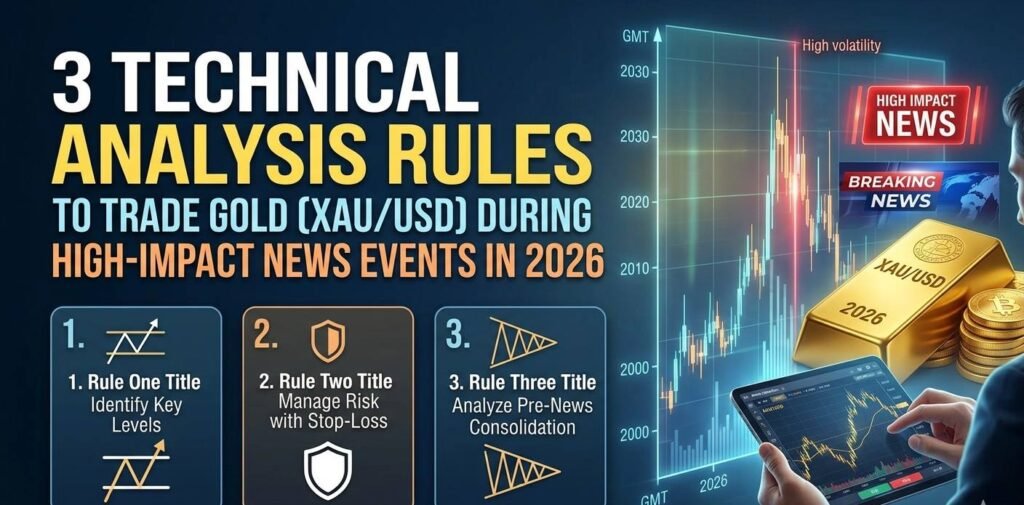
But these rules form a sequence, not a menu. You check implied move to calibrate position size (Rule 1). You set your orders at key structural levels before the event (Rule 2). You wait for structure confirmation after the event before entering (Rule 3). Skip any one of them and you’re leaving a gap in your risk framework.
Think about a typical Fed decision setup. XAU/USD sits in a well-defined range, RSI near 40, three major SMAs overhead. A trader using all three rules would: check the implied move (typically $20 to $35 for a tier-1 event), set orders at pre-identified structural levels, then wait post-announcement for a confirmed 15-minute structure break before committing full position.
That’s not exciting. It’s also not a blown account.
My read is that the traders who make consistent money in news environments aren’t smarter than everyone else. They’re just more boring.
The Psychological Layer Nobody Talks About
Wait. There’s one more thing that none of the technical frameworks fully address.
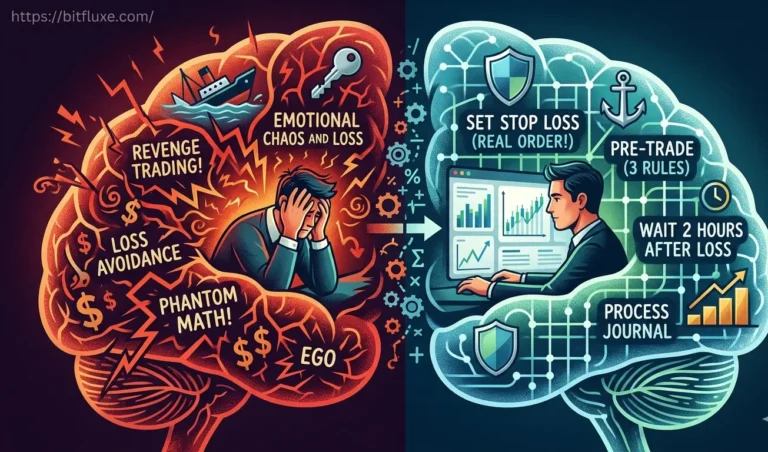
The hardest part of news trading isn’t knowing the rules. It’s not breaking them when the market is moving fast and your P&L is flashing red or green. Every trader knows intellectually that they shouldn’t chase a fast-moving candle. In the moment, with adrenaline running, that knowledge competes with something much older and much louder.
This is why pre-commitment works. When Scott Bates says “don’t touch an open position once the news drops,” the reason isn’t just technical. It’s psychological. The act of setting your plan before the emotional environment changes creates a commitment mechanism that’s far stronger than willpower in the moment.
The World Gold Council published research showing that retail trader behavior during volatility spikes consistently underperforms systematic rule-following by significant margins. That gap isn’t intelligence. It’s the difference between trading your plan and trading your feelings.
Build your system. Test it in lower-volatility conditions. Then trust it when everything is moving fast.
What This Means for Every Trader Facing a News Event
The setup is always the same. Gold is in some kind of range or trend. A major event approaches. Nobody knows the outcome. JPMorgan has a bullish target. Morgan Stanley has concerns. Analysts disagree. What you can control is position size, pre-set levels, and entry discipline.
For anyone trading XAU/USD pairs and tracking the cross-currency impact, check the BTC to USDT converter on Bitfluxe. During high-volatility gold events, crypto markets often move in correlation, and having a real-time rate reference matters.
The traders who do well in this environment aren’t predicting news outcomes. They’re managing their response to confirmed price action. That’s the shift.
What Is a Market Structure Shift (MSS) in Gold Trading? A Market Structure Shift occurs when XAU/USD breaks a confirmed swing high or swing low on the 15-minute chart with strong momentum following a news event. It signals that the initial “stop hunt” volatility has exhausted and the real directional move has begun. Traders use this confirmation to enter positions with defined ATR-based stops rather than chasing the first spike.
How Do You Calculate ATR-Based Stops for XAU/USD? Check the current 14-period Average True Range (ATR) on your charting platform for XAU/USD. In 2026, gold’s daily ATR has expanded significantly due to geopolitical volatility. Multiply the ATR value by 1.5 for a moderate buffer or 2x for high-impact events. Place your stop loss at that distance from your entry point. This prevents noise-driven stop-outs during the secondary volatility waves that follow major news releases.
FAQ
Q: What is the options-implied move for gold before Fed decisions?
plus or minus $15 to $30 for tier-1 events like Fed decisions or CPI prints, according to VolRadar founder Aigars Pilmanis. In practice, gold often overshoots this range on the first candle before reverting.
Q: How do you trade gold during the NFP news release?
Wait for the 15-minute Market Structure Shift after the initial volatility exhausts. Avoid entering on the first wick. It’s almost always a stop hunt designed to clear liquidity on both sides before the real move begins.
Q: What stop loss should I use for XAU/USD during news events?
Use ATR-based stops at 1.5x to 2x the current Average True Range instead of fixed pip stops. Gold’s volatility during high-impact events makes standard 20-pip stops ineffective against normal market noise.
Q: How much should I reduce position size before gold news events?
Cut to 25–30% of normal position size before major data releases like CPI or Fed decisions. This preserves capital for the post-event reversion trade, which tends to offer a cleaner risk-to-reward setup.
Q: Does high-impact news always move gold in the expected direction?
It depends. Counterintuitive dynamics emerge regularly: geopolitical crises can push gold lower rather than higher when the crisis also reignites inflation fears and strengthens the US Dollar simultaneously. Direction prediction into news events is unreliable. Reacting to confirmed structure is more consistent.
Q: Does this 15-minute rule work for all news events or just the big ones?
It works best on tier-1 events (Fed, CPI, NFP) where initial volatility is severe enough to create a clean structure before the real move. For tier-2 events like PMI or housing data, the initial move is often smaller and the structure shift less defined. Apply more caution with lower-conviction setups.
Q: If I follow all three rules perfectly during a brutal news week, will I make money?
Probably not big money. But you’ll protect your capital, and in a month where gold drops 17%, that is the real win. Surviving drawdown periods with capital intact is what allows you to trade the recovery.
About This Analysis: The market data and technical levels referenced in this article are sourced from FXStreet, LiteFinance, TradingView, CME Group, and the World Gold Council. Expert quotes are from Aigars Pilmanis (VolRadar), Scott Bates (Reputation Defense Networks), and Sovic Chakrabarti (Icy Tales). The editorial perspective represents the Bitfluxe team’s interpretation of current market conditions based on ongoing coverage of gold, crypto, and forex markets since 2024. This is not financial advice.
⚠️ Price Data Note: Any XAU/USD price levels referenced in this article are illustrative of market conditions at time of writing. Always verify current levels at your broker or via Bitfluxe live tools before making any trading decision.

Hi, I’m Baber — founder of Bitfluxe and a crypto and forex enthusiast with a passion for financial markets. I specialize in breaking down technical analysis concepts like support/resistance levels, RSI, and MACD into simple, actionable guides for everyday traders. I spend most of my time analyzing charts on TradingView, tracking gold (XAU/USD) price movements, and researching blockchain security trends. My goal at Bitfluxe is simple: to give retail traders access to the same clear, data-driven insights that professional traders use — without the jargon.