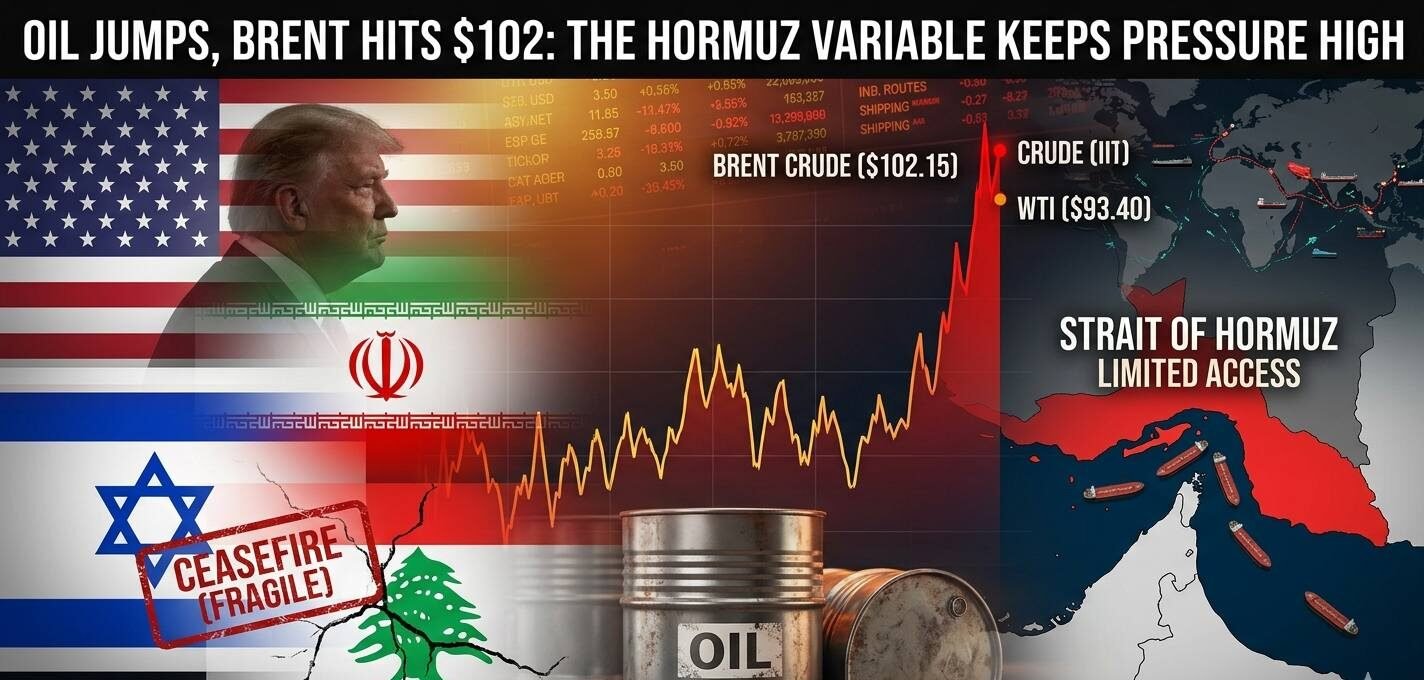
Oil Prices Today: Why Peace Talks Aren’t Lowering Gas Costs
Everyone loves a “peace” headline. Last week, the world cheered as the Israel-Lebanon ceasefire took effect. Oil prices took a quick dip, and politicians started taking victory laps. But if peace is supposedly here, why did you just pay more at the pump? The truth is, the oil market doesn’t trade on hope; it trades on cold, hard math and physical supply.
As of today, April 23, 2026, the “peace discount” has officially evaporated. Brent crude is back flirting with $102 per barrel, and the skepticism in the trading pits is thick enough to cut with a knife.
The Ceasefire Mirage: Why Oil Markets Refuse to Calm Down
The 10-day ceasefire announced on April 16 looked great on paper. In reality? It’s a mirage. Reports of skirmishes on the border over the last 48 hours have triggered algorithmic trading triggers across Wall Street.
Traders are putting the geopolitical risk premium back into the price. Why? Because a “pause” in fighting isn’t the same as a “solution.” If you are monitoring how these shifts affect other assets, checking a live gold and crypto dashboard can show you how investors are moving their money into safe havens.
Trump’s “Deal of the Century” or Just a Strategic Delay?
President Trump recently extended the timeline for US-Iran talks, claiming a deal is “very close.” On the surface, this should be bearish for oil. More Iranian barrels should mean lower prices, right?
Not so fast. The market is showing classic backwardation—a fancy way of saying traders are worried about supply right now. To see how these political statements impact global currency values, visit Bitfluxe.com for real-time exchange rate updates. Trump’s rhetoric is keeping the doors open, but until the physical crude starts flowing, the Strategic Petroleum Reserve (SPR) 2026 levels remain a major concern.
Featured Snippet: The Trump-Iran Effect
Despite optimistic headlines, oil prices often rise during negotiations if the “terms of engagement” remain unclear. Traders currently view the US-Iran talks as a “wait-and-see” event rather than a guaranteed supply boost.
The Hormuz Variable: The $100 Barrel Floor
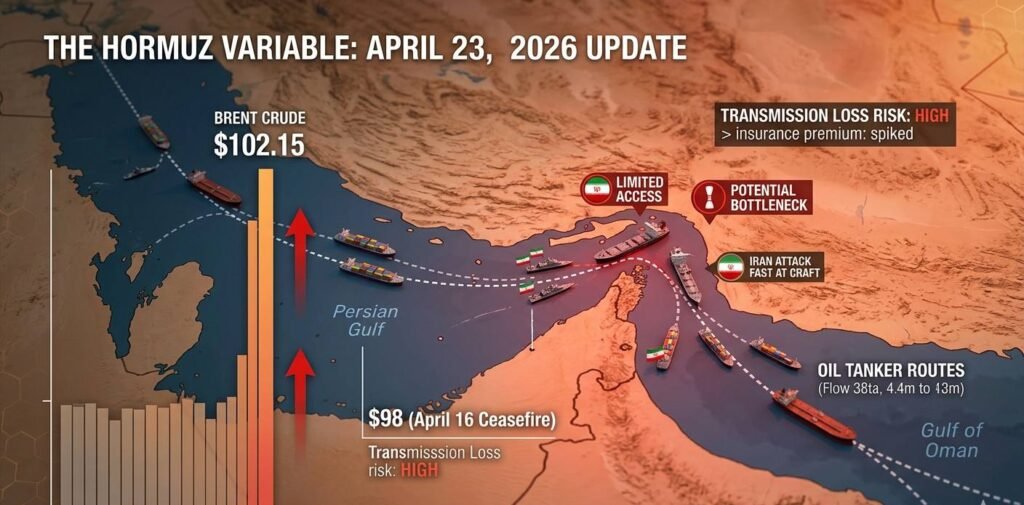
If you want to know why oil isn’t dropping to $70, look at a map. The Strait of Hormuz is currently in a state of “Limited Access.” Even with a ceasefire in Lebanon, Iran still holds the keys to the world’s most important oil chokepoint.
This creates a geopolitical deadlock. As long as ships are being diverted, there is a physical shortage of barrels. Many savvy traders are now looking at financial data tools on Bitfluxe to hedge their positions against this sudden volatility. You can’t fuel a truck with a futures contract, and the physical bottleneck is providing a hard floor for prices at $100.
Crude Benchmarks 101: Brent vs. WTI in a Volatile 2026
Understanding the spread between the two big benchmarks is key to knowing what happens next.
| Benchmark | Current Price (Apr 23) | Focus Area |
| Brent Crude | $102.15 | Global trade & Middle East risk |
| West Texas Intermediate (WTI) | $93.40 | US domestic supply & storage |
The gap is widening because Brent is more sensitive to international tensions. For a detailed breakdown of global market trends, staying updated with live charts is essential.
Inflation’s New Ghost: Why Your Gas Station Hasn’t Read the News
You’ve seen the news: “Oil prices fall on ceasefire hopes.” Then you go to the gas station and the price is up 5 cents. There is a massive lag in the supply chain bottleneck.
In 2026, with the economy already on edge, “sticky” pricing is the new ghost haunting household budgets. If you are trying to calculate how this inflation affects your investments, using a free profit calculator can help you plan your next move.
Beyond the Headlines: What the “Smart Money” is Buying Now
While retail investors panic over every tweet, the “smart money” is looking at energy security 2026 trends. They aren’t just buying oil; they are hedging with digital assets.
If you’re looking for a way to track these moves, you can check the Bitfluxe Home page for real-time asset comparisons. It’s clear that the market is preparing for a “Long War” scenario, even if the headlines say “Short Peace.”
FAQ
Q1: Why is oil $100 if there is a ceasefire?
Because the ceasefire is temporary and hasn’t fixed the supply issues in the Strait of Hormuz.
Q2: Did Trump’s Iran deal fail?
No, it has been extended. However, the market is skeptical that Iranian oil will hit the market before summer 2026.
Q3: Is Brent crude more important than WTI?
For global prices and gas costs in Europe and Asia, yes. For US domestic policy, WTI is the one to watch.
Q4: Will gas prices go down in May?
Unlikely. With summer driving season approaching and refinery maintenance scheduled, prices usually stay high.
Q5: What is the biggest risk to oil right now?
A total closure of the Strait of Hormuz. If that happens, $100 will look like a bargain.
⚠️ PUBLISHER NOTE: As a market analyst, I’ve seen these “peace rallies” fail before. Always look at the physical shipping data over the political tweets. Your wallet will thank you.

Hi, I’m Baber — founder of Bitfluxe and a crypto and forex enthusiast with a passion for financial markets. I specialize in breaking down technical analysis concepts like support/resistance levels, RSI, and MACD into simple, actionable guides for everyday traders. I spend most of my time analyzing charts on TradingView, tracking gold (XAU/USD) price movements, and researching blockchain security trends. My goal at Bitfluxe is simple: to give retail traders access to the same clear, data-driven insights that professional traders use — without the jargon.