7 Mental Habits That Separate Successful Long-Term Traders
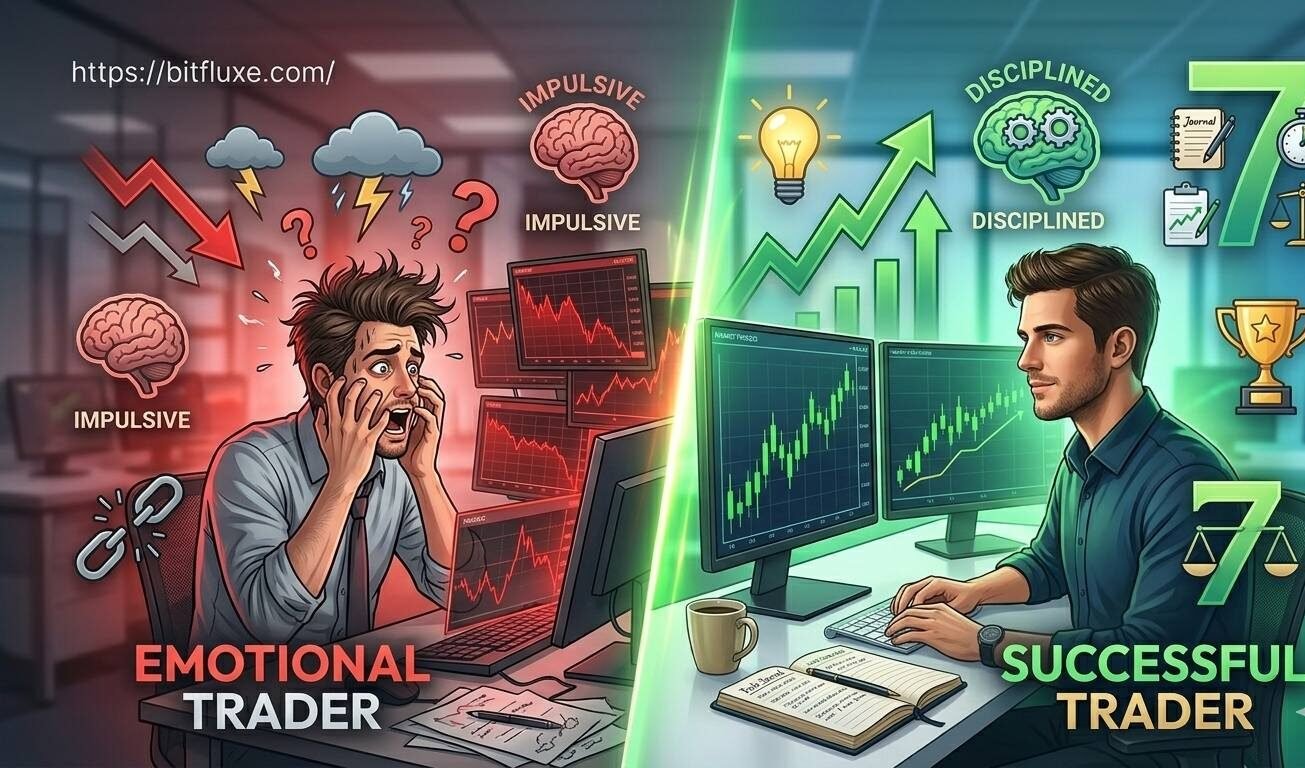
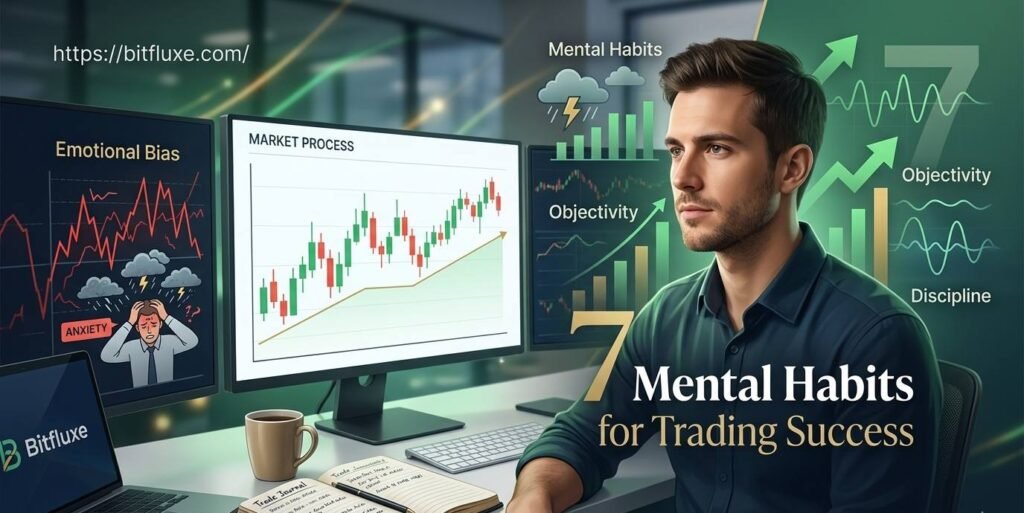
Trading success hinges less on strategy and more on the mental discipline to execute it without bias. Professionals in behavioral finance and trading psychology agree that emotional control separates consistent winners from those who repeatedly sabotage their own plans. This article breaks down seven cognitive habits that experts have identified as critical for maintaining objectivity and discipline in volatile markets.
- Use a Simple Trade Journal
- Catch Mindset Shifts Then Reset Quickly
- Rely on Base Rates Not Moods
- Precommit Rules and Execute Without Debate
- Separate Self Worth from Performance
- Activate Parasympathetic Mode before Decisions
- Prioritize Process over Outcome
Use a Simple Trade Journal
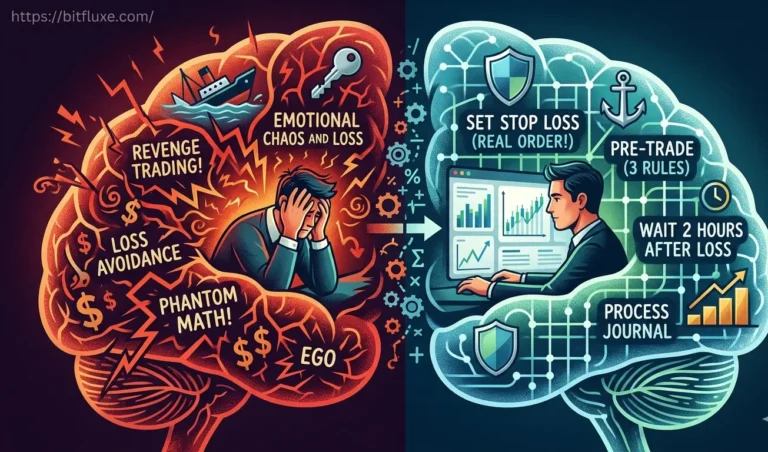
As a psychiatric nurse practitioner, I’ve worked with many people whose jobs or side activities involve high stress, including traders who feel overwhelmed by money ups and downs. One mental habit that separates successful long-term traders from those who struggle with emotional bias is keeping a simple trading journal. They write down each trade—what they bought or sold, why they did it, and how they felt at the time, like excited, scared, or rushed. Then they review it later with a clear head.
This habit helps them see patterns. Maybe fear made them sell too early, or excitement pushed them to risk too much. Successful traders use the journal to learn and stick to their plan instead of letting feelings take over. It turns trading from a guessing game driven by moods into a steadier process based on facts and rules.
In my practice, traders who started this habit often felt less anxious and made better choices over time. One patient said reviewing his notes showed him he traded worst when tired or after a loss, so he added breaks and rules for those times. It gave him control back. Research from trading psychology experts shows that traders who keep journals and review them regularly build stronger discipline, make fewer impulsive moves, and see better results in the long run. It works like a mirror for the mind—helping spot problems before they cost money.
What has helped me cope in similar high-pressure situations, and what I teach others, is pairing the journal with short pauses. Before any big decision, take a breath and ask, ‘Am I acting on facts or feelings right now?’ This small step calms the mind and reduces mistakes. In healthcare, where pressure is constant, I use the same idea to stay steady.
The good news is anyone can start this habit with a notebook or phone app. It doesn’t take long, but it builds the calm, clear thinking needed for lasting success. Trading will always have ups and downs, but this mental habit protects your peace and your results. It reminds us that the strongest minds aren’t those without feelings, they’re the ones who understand and manage them well. When you care for your mind this way, you handle pressure better, in trading and in everyday life.
Shebna N Osanmoh, Psychiatric Nurse Practitioner, Savantcare
Catch Mindset Shifts Then Reset Quickly
The mental habit is catching emotional relapse early—naming the state you’re in (irritable, raw, isolated, sleep-deprived) before it turns into a story that justifies a bad decision. In my private practice in Redondo Beach I work with anxiety/depression, trauma, and addiction recovery, and the same pattern shows up: people don’t “snap,” they drift as self-care drops and reactivity rises.
In addiction work, the highest-leverage moment is before the urge becomes a plan; we look for the behavioral tells like skipping support, isolating, and neglecting basics like sleep and food. For traders, the equivalent is noticing: “I’m scanning for danger, I’m revenge-trading, I’m trying to get back to baseline,” and treating that as a red flag—not a reason to press.
One concrete example: a client doing well would hit a stressful week, stop routines, sleep poorly, and then feel emotionally “raw” for no clear reason; the next step was overconfident thinking (“I’m fine now, I can handle it”) and testing limits. Translating that to trading: if you notice the early state shift, you pause, do a quick grounding reset (paced breathing, five-senses check), and only then decide whether you’re actually in a fit state to execute your plan. To stay disciplined and focus on long-term growth without emotional bias, try our Bitcoin DCA Calculator to automate your strategy.
The separator isn’t willpower; it’s the practiced skill of non-judgmental self-observation plus quick course-correction—CBT-style reality checking and mindfulness acceptance without acting. Long-term performers treat internal volatility like market volatility: data to respond to, not a command to obey.
Rodman Walsh, Co-Founder, Beyond Therapy Group
Rely on Base Rates Not Moods
The mental habit is keeping a “base-rate file” and forcing every new decision to compete against it. I’ve spent 17+ years in M&A, capital raising, real estate development, and now run investments at Sahara while acting as CIO for a multi-billion-dollar family platform at Fiume—so I live in environments where emotion is expensive.
At Atalyst and later at Sahara, I saw smart people get emotionally hijacked by recency (“it’s working now, so size up”) or by pain (“I need to get back to even”). The base-rate habit interrupts that by asking: “What usually happens in setups like this across cycles, and what’s my pre-committed play when it doesn’t?”
Practically: write down 10-20 prior “similar situations” (your own trades, plus market analogs), the conditions at entry, what broke, and how long mean reversion took. Then when you feel urgency, you’re not debating with your mood—you’re benchmarking against a documented history and acting from that reference point.
David Hirschfeld, Partner, Sahara Investment Group
Precommit Rules and Execute Without Debate
I’m Runbo Li, Co-founder & CEO at Magic Hour.
The one mental habit that separates long-term winners from everyone else is what I call “pre-commitment detachment.” It means you make your decision before the emotion hits, and then you execute like a robot when it does.
Most people think discipline is about white-knuckling through a bad moment. It’s not. Discipline is about removing yourself from the moment entirely by deciding in advance what you’ll do when the moment arrives.
I learned this building Magic Hour. Early on, David and I had to make resource allocation calls that felt a lot like trading. We’d see a feature getting traction and every instinct screamed “pour everything into this right now.” But we built a rule: no reactive pivots for 72 hours. We’d write down what we wanted to do, why, and what we expected to happen. Then we’d wait. About 60% of the time, the urgency evaporated. The signal was noise.
A former VC CFO I spoke with last year told me something that stuck. He said the best portfolio managers he worked with all had the same trait. They wrote their exit criteria the day they entered a position. Not after it moved. Not after they were up 40% and feeling invincible. Day one. And when the criteria hit, they executed. No renegotiation with themselves.
That’s the real enemy, by the way. Not the market. Not volatility. It’s internal self-negotiation. That voice that says “well, the thesis changed” or “let me just hold a little longer.” Every struggling trader I’ve ever talked to describes the same pattern. They had a plan. They abandoned it because the emotional temperature shifted.
The fix is boring. Write it down before you feel anything. Entry criteria, exit criteria, position size, max loss. Then treat that document like a contract with yourself. The traders who last decades aren’t smarter. They just stopped negotiating with their own adrenaline.
Emotion is information, not instruction. The moment you start taking orders from your feelings, you’ve already lost the trade.
Runbo Li, CEO, Magic Hour AI
Separate Self Worth from Performance
I work with high-achieving finance professionals in Midtown Manhattan, and the pattern I see most clearly isn’t about strategy—it’s about identity. The traders who struggle long-term aren’t failing because of bad technique; they’re failing because their self-worth is entirely fused with their P&L.
I worked with a client—a finance executive I’ll call Marcus—who believed his value as a person was inseparable from his portfolio’s performance. Every market dip triggered something far deeper than financial fear: it was the terror of becoming nobody. That unconscious equation—”my net worth equals my worth”—was driving every reactive, emotionally-loaded decision he made.
The mental habit that actually separates disciplined traders isn’t a technique. It’s the capacity to hold a loss without it meaning something catastrophic about who you are. That requires understanding the internal architecture underneath the anxiety, not just managing the anxiety itself.
When Marcus began to decouple his identity from his performance, his decision-making shifted from “fight or flight” reactivity to something more grounded and strategic. The market hadn’t changed. His internal world had.
Efrat Gotlib, Founder & CEO, Therapy24x7
Activate Parasympathetic Mode before Decisions
I’ve spent 20+ years working with women managing stress, anxiety, and emotional overwhelm — and what I’ve observed translates directly to trading psychology: the people who stay consistent long-term are the ones who’ve built a **body-based stress regulation practice**, not just a mental one.
When your nervous system is in chronic fight-or-flight, your decision-making is compromised — full stop. I’ve seen this play out with clients who couldn’t follow through on their own fitness goals simply because unmanaged stress was hijacking their judgment. The same biology affects a trader staring at a red screen.
The habit that actually separates them? Deliberate parasympathetic activation *before* high-stakes decisions. Specific breathwork, mindful movement, even a short walk outside — these aren’t soft suggestions. They physically shift your brain out of reactive mode and into clearer thinking. I’ve watched clients go from emotionally impulsive to genuinely measured once this became non-negotiable in their daily routine.
Emotional bias isn’t a character flaw — it’s a dysregulated nervous system making decisions. Treat the body first, and the mind follows.
Joy Grout, Owner, Personalized Fitness For You
Prioritize Process over Outcome
I’ve built and exited multiple companies across different industries, which means I’ve had to make high-stakes decisions repeatedly under pressure, uncertainty, and sometimes serious financial stress. That pattern taught me more about decision-making under emotional load than any book could.
The one habit I keep coming back to: **separating the decision from the outcome evaluation**. Successful operators I’ve worked with don’t judge their decisions based on how things turned out—they judge them based on the process they followed *before* acting. A bad outcome from a sound process is just variance. A good outcome from a sloppy process is a trap.
I saw this play out when we were scaling one of my construction ventures. A competitor drastically undercut our pricing. The emotional pull was to match them immediately. Instead, we slowed down, evaluated the decision on its own merits—not the fear—and held our pricing. That competitor was gone within a season because they couldn’t sustain it.
The traders and founders who struggle long-term keep confusing *confidence* with *certainty*. The ones who last have learned to act confidently on incomplete information without needing the outcome to validate the process.
Matt Strunk, Co-Founder, Cedar Creek Constructio
Conclusion
Trading is 20% strategy and 80% psychology. By implementing these 7 habits, you can protect your capital and grow steadily at Bitfluxe.

Hi, I’m Baber — founder of Bitfluxe and a crypto and forex enthusiast with a passion for financial markets. I specialize in breaking down technical analysis concepts like support/resistance levels, RSI, and MACD into simple, actionable guides for everyday traders. I spend most of my time analyzing charts on TradingView, tracking gold (XAU/USD) price movements, and researching blockchain security trends. My goal at Bitfluxe is simple: to give retail traders access to the same clear, data-driven insights that professional traders use — without the jargon.