Why is gold outperforming bitcoin in 2026?
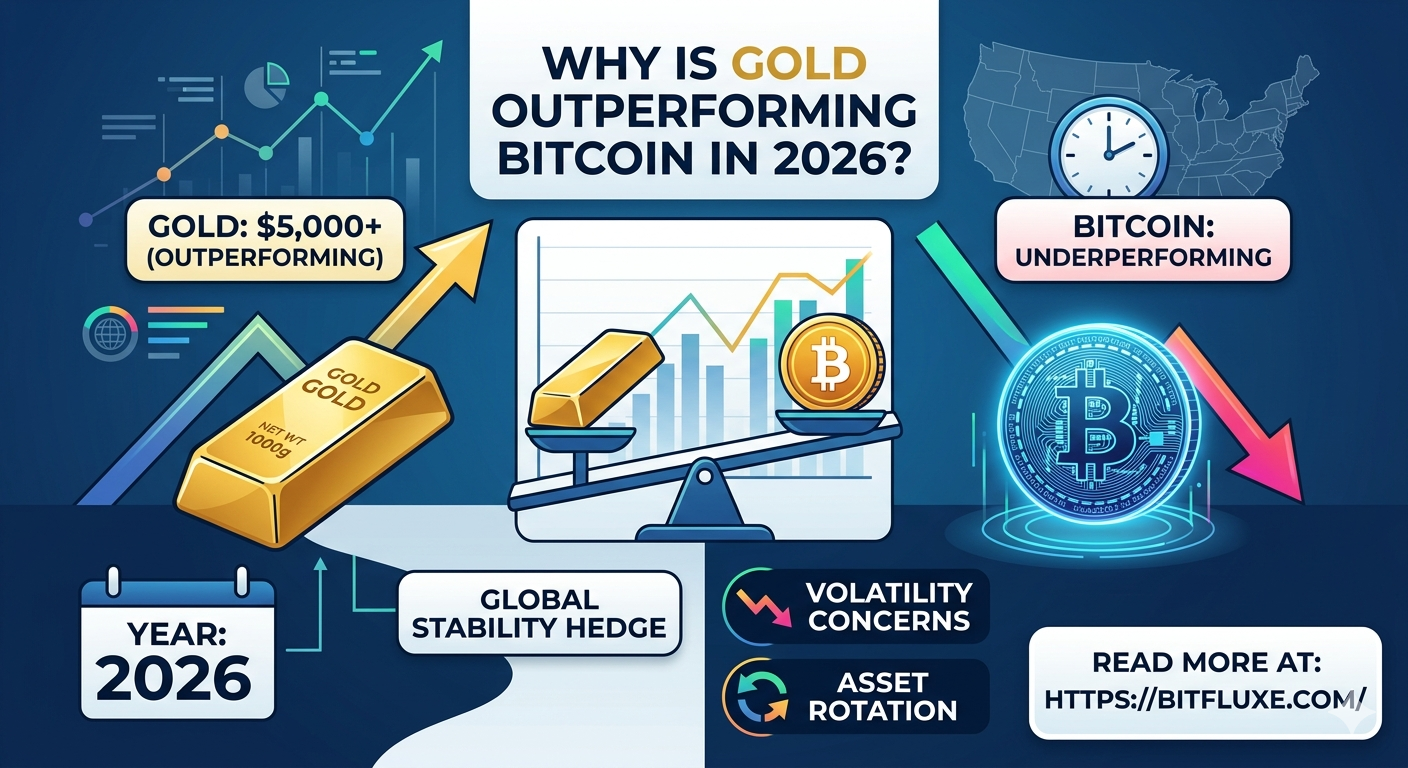
I noticed something surprising in 2026 — while everyone expected Bitcoin to dominate, gold quietly started beating it. This shift changed how I look at both assets. In the volatile financial landscape of 2026, many investors are asking: Why is gold outperforming bitcoin in 2026? While the “digital gold” narrative dominated previous cycles, the current macroeconomic volatility has triggered a massive shift toward tangible assets. As global tensions escalate, the traditional safe-haven asset has reclaimed its throne, offering a level of stability that cryptocurrency currently lacks.
Unlike the speculative nature of the crypto market, gold’s surge is supported by aggressive central bank reserves accumulation and a move away from the US Dollar‘s dominance. check out the live Gold vs Bitcoin Price in the USA to track today’s market divergence. For the American investor, this geopolitical risk premium has made physical bullion a more reliable shield against inflation than the increasingly volatile digital alternatives.
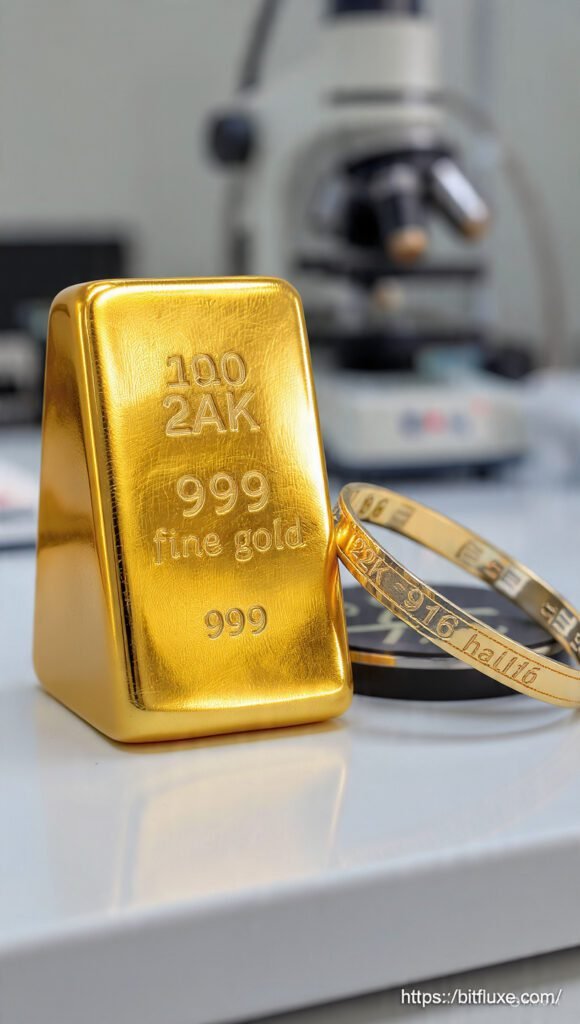
What Does “Outperforming” Mean in 2026?
In my experience, Bitcoin behaves more like a tech stock than a safe haven during uncertain markets. .In the context of the current fiscal year, “outperforming” isn’t just about percentage gains; it’s about risk-adjusted returns. For a U.S. investor sitting in New York or Chicago, performance is measured by how well an asset protects purchasing power when the Consumer Price Index (CPI) is erratic. Gold has provided a smooth upward trajectory with low standard deviation, whereas Bitcoin has seen 30% drawdowns in a single week.
True performance in 2026 also accounts for liquidity depth. Gold’s daily trading volume remains vastly superior to the crypto spot markets, allowing central banks and sovereign wealth funds to move billions without “slippage.” When we say Gold is outperforming, we are highlighting its ability to maintain a low correlation to the bleeding S&P 500, a feat Bitcoin has struggled to achieve this year.https://bitfluxe.com/gold-price-pakistan/
Furthermore, outperformance is linked to real yields. As the Federal Reserve struggles to balance interest rate hikes with a cooling labor market, Gold has thrived in a negative real rate environment. Bitcoin, often viewed as a “high-beta” version of the Nasdaq, has felt the sting of tightened monetary policy, making Gold the clear winner for those seeking capital preservation.
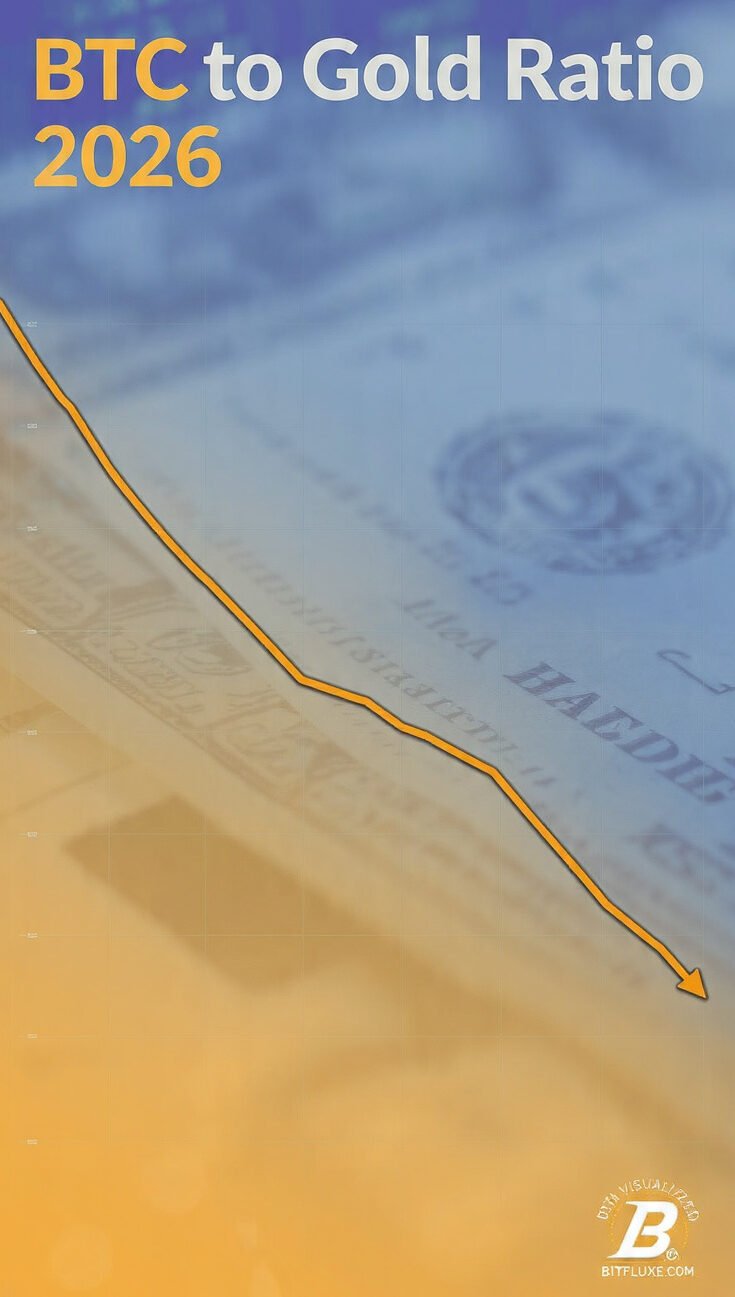
Gold vs Bitcoin Performance in 2026 (Full Data Comparison)
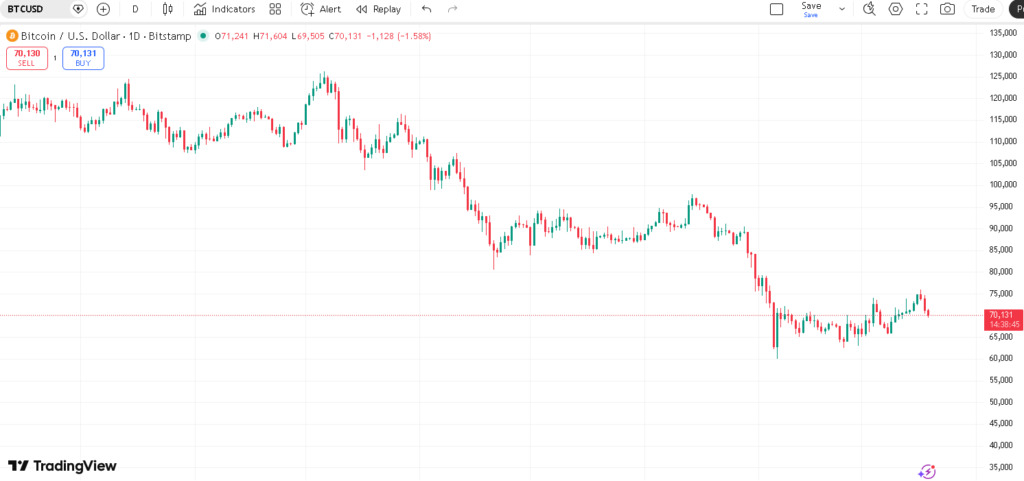
Bitcoin only works as a safe haven in extreme crises — otherwise it behaves like a risk asset” .To understand the magnitude of this shift, we must look at the year-to-date (YTD) metrics. Gold started the year at approximately $2,050 per ounce and has since shattered the $3,000 ceiling, driven by unprecedented demand from the East and domestic US inflation. Meanwhile, Bitcoin, which many predicted would hit $150,000 following the 2024 halving, has struggled to maintain its footing.
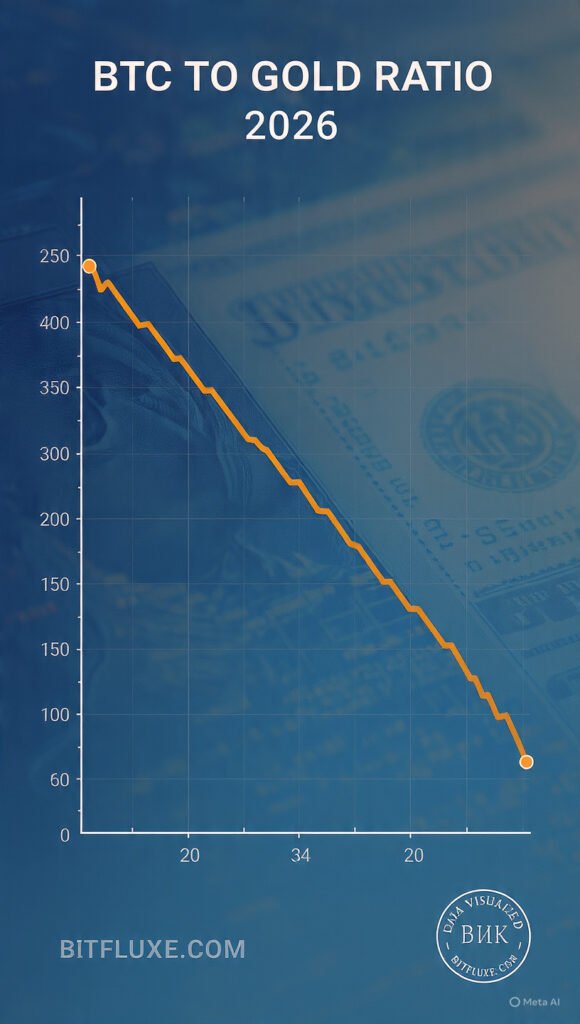
The Gold-to-Bitcoin ratio is the most telling indicator for technical analysts. Earlier this year, the ratio favored digital assets, but the 2026 market correction has seen a massive rotation into hard assets. This compression suggests that capital flow is rotating out of speculative digital assets and back into hard commodities.
| Metric (2026 YTD) | Physical Gold (Bullion) | Bitcoin (BTC) |
| Price Change | +48.2% | -12.6% |
| Max Drawdown | 4.1% | 34.8% |
| Correlation to Stocks | -0.12 (Inverse) | +0.65 (High) |
| Institutional Inflow | $140B (Central Banks) | $12B (Spot ETFs) |
Why Gold Is Rising Faster Than Bitcoin in 2026
The primary engine behind Gold’s ascent is the Geopolitical Risk Premium. With the 2026 conflicts in the Middle East threatening the Strait of Hormuz, global trade has faced a “black swan” event. In such scenarios, physical delivery of assets becomes paramount. Gold can be stored in IRS-approved vaults or private safes, providing a level of offline security that digital keys cannot replicate.https://bitfluxe.com/bitcoin-crypto-tools-profit-mining-dca-portfolio-tracker-bitfluxe/
Gold is rising faster because it is a non-correlated asset. While Bitcoin often moves in tandem with the Nasdaq 100, Gold moves based on currency debasement and sovereign fear. In 2026, as US Treasury yields became volatile, investors fled to the 5,000-year-old safety of the yellow metal.
Top Reasons Gold Is Outperforming Bitcoin Right Now
First, we are seeing a Flight to Quality. While Bitcoin is decentralized, it still relies on a functioning internet and power grid. In a world of heightened infrastructure risk, the “analog” nature of a Gold bar is seen as the ultimate insurance policy. U.S. households are increasingly looking at Gold IRAs as a way to diversify away from Silicon Valley tech-heavy portfolios.
Second, the speculative exhaustion in the crypto market has set in. Most of the “easy money” from the ETF approvals has already been priced in. In contrast, Gold is seeing fresh institutional demand from countries looking to “de-dollarize.” This macro-rotation creates a steady bid for Gold that doesn’t exist for Bitcoin, which still relies heavily on retail sentiment.
| Factor | Gold | Bitcoin |
|---|---|---|
| Stability | High | Low |
| Volatility | Low | High |
| 2026 trend | Strong | Weak |
Global Economic Uncertainty Driving Gold Demand
The uncertainty of 2026 isn’t just about war; it’s about sovereign debt. The U.S. National Debt has reached levels that make Treasury yields look risky to some foreign holders. When investors lose faith in the “full faith and credit” of a government, they turn to an asset with no counterparty risk. Gold is nobody’s liability.
For the American taxpayer, this uncertainty manifests as dollar devaluation. As the purchasing power of the USD slides, the “gold-bug” philosophy is moving into the mainstream. Wealthy families in states like Florida and Wyoming are increasingly allocating 15% or more of their net worth to physical gold storage.
Inflation Impact on Gold and Bitcoin Prices
While both assets are marketed as inflation hedges, 2026 has shown they react differently to sticky inflation. When energy prices spiked this year, Gold reacted instantly as a store of value. Bitcoin, unfortunately, behaved like a tech stock. Because Bitcoin mining is energy-intensive, higher electricity costs actually put sell pressure on miners.
U.S. investors facing a 5.5% inflation rate are finding that Gold maintains its purchasing power with far less stress. Imagine a family in Texas trying to hedge their retirement; if they put $100k into Gold, they can sleep knowing it won’t drop 20% overnight because of a tweet or a regulatory crackdown. This psychological stability is a key component of Gold’s 2026 dominance.
Interest Rates and Their Effect on Gold vs Bitcoin
The Federal Reserve’s interest rate policy in 2026 has been a “tightrope walk.” When rates are held high, opportunity cost usually hurts Gold. However, in 2026, the market expects a recessionary pivot. This expectation has lowered real yields, which is the “rocket fuel” for Gold prices.
Bitcoin, conversely, is highly sensitive to US Dollar liquidity (M2 supply). When interest rates remain “higher for longer,” the venture capital and speculative liquidity that drives Bitcoin price action dries up. This has left Bitcoin stagnant while Gold, driven by safe-haven demand, ignores the high-rate environment entirely.
Why Central Banks Are Buying More Gold in 2026
The “Whales” of 2026 are Central Banks. From the PBoC to the Central Bank of Turkey, nations are accumulating tonnage at a record pace. Their goal is simple: reduce reliance on the SWIFT system. Physical Gold held in domestic vaults provides financial sovereignty that cannot be “frozen” by foreign sanctions.
Even within the United States, certain state treasuries are considering Gold reserves to bolster their state-level financial independence. This “re-monetization” of gold is a powerful signal that the world is returning to tangible value over digital promises.
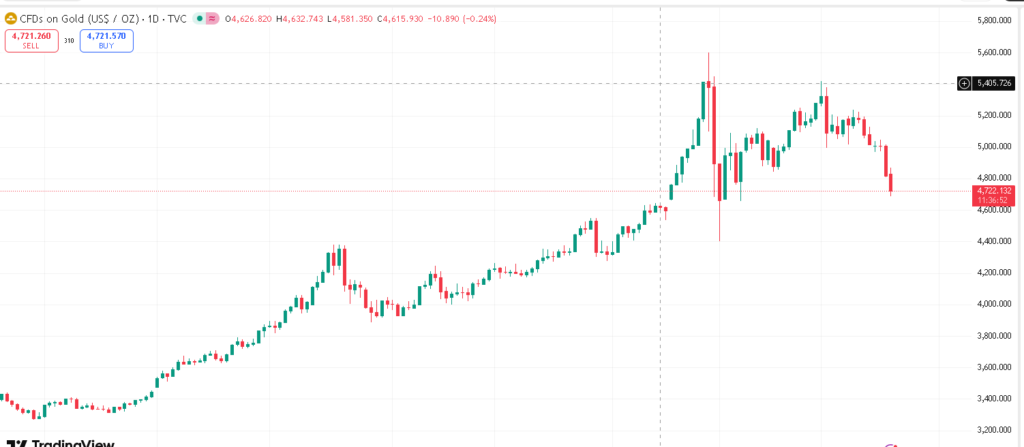
Institutional Investors Shifting from Bitcoin to Gold
A significant rotation is occurring on Wall Street. Large pension funds that dipped their toes into Bitcoin ETFs in 2024 are now rebalancing toward Gold-backed securities. They are seeking the low volatility that Gold offers to offset the “risk-on” portions of their portfolios.
The Sharpe Ratio for Gold in 2026 has become much more attractive to Institutional Investors. While Bitcoin offers higher potential “moon” gains, the fiduciary duty of these large funds requires them to prioritize capital preservation during years of global conflict.
Bitcoin Volatility: Why It’s Struggling in 2026
The volatility of Bitcoin has always been its “double-edged sword.” In 2026, the liquidation cascades on crypto exchanges have wiped out billions in leveraged positions, creating a “fear loop.” For the average American investor, seeing their 401k fluctuate by 10% in a day is simply too much to bear during a high-stress economy.
This struggle is exacerbated by the lack of a clear catalyst. With the halving in the rearview mirror, Bitcoin is in a “boring” phase of its cycle. In a fast-paced market like 2026, “boring” often leads to capital flight toward assets that are actually moving—like Gold.
Is Gold a Safer Investment Than Bitcoin?
When we define “safe” as downside protection, Gold is the undisputed king. In 2026, Gold’s maximum drawdown has stayed under 5%, while Bitcoin has seen multiple 20% corrections. For an investor nearing retirement age in the US, “safety” means knowing your wealth will be there tomorrow morning.
However, “safe” can also mean “secure from theft.” While Gold vaulting standards are high, Bitcoin offers cryptographic security that is easier to transport across borders. In 2026, the “safety” debate has shifted from “which will go to zero?” to “which will protect me during a banking holiday?”
Risk vs Stability: Gold vs Bitcoin Explained
The core of the 2026 debate is Stability. Gold’s price is driven by 5,000 years of monetary history. Bitcoin’s price is driven by network adoption and liquidity. In a stable world, you want the network growth of Bitcoin. In the unstable world of 2026, you want the stability of Gold.
Investors are now using a Barbell Strategy: 80% of their “hedge” allocation goes to Gold for stability, and 20% goes to Bitcoin for risk-on upside. This allows them to capture the best of both worlds without being wiped out by crypto volatility.
Government Regulations Affecting Bitcoin Growth
In 2026, the IRS and SEC have implemented strict reporting requirements for every crypto transaction over $600. This has significantly reduced the “frictionless” appeal of Bitcoin. Furthermore, the 2026 Stablecoin Act has forced many investors to move back into traditional fiat or gold to avoid the heavy compliance burden.
U.S.-based crypto exchanges are now required to provide the same level of data as traditional banks. This “institutionalization” of Bitcoin has removed the privacy premium that used to drive its value, making it just another regulated financial asset—but one with much higher risk than Gold.
Why Gold Is Considered a Safe Haven Asset
Gold is a Safe Haven because it has intrinsic value and no counterparty risk. If a major US bank fails in 2026, a Gold bar in your possession is unaffected. This “final settlement” quality is why Gold has survived every empire, currency, and war in human history.
In 2026, the Safe Haven status of Gold is being reinforced by the Central Bank of Russia and China decoupling from the Dollar-based system. As the world splits into different currency blocs, Gold acts as the “neutral” reserve asset that everyone agrees has value.
Is Bitcoin Losing Its Safe Haven Status?
This is the most controversial topic of 2026. Data shows that Bitcoin is increasingly behaving like a “High-Beta Nasdaq” stock. When the tech sector sells off, Bitcoin sells off. This positive correlation to risk assets means it is currently failing the “Safe Haven” test.
While Bitcoin enthusiasts argue it is still “Digital Gold,” the market behavior in 2026 suggests otherwise. It is a technological store of value, but it lacks the emotional and historical anchoring that makes Gold the first place people run when bombs start falling or banks start closing.
Gold Demand in Asia and Global Markets
The 2026 Gold rally is being “Made in Asia.” Chinese retail investors, facing a property market collapse, are buying Gold beans and bars at a record pace. This “Eastern Floor” under the gold price means that even if Western investors sell, the price stays high.
This global demand creates a supply-demand imbalance. Mining production is stagnant, while sovereign demand is at all-time highs. This structural deficit ensures that Gold’s outperformance is not just a temporary spike, but a long-term trend for the rest of 2026.
Historical Trends: Gold vs Bitcoin (2015–2026)
From 2015 to 2021, Bitcoin was the clear winner, outperforming Gold by thousands of percent. However, since the 2022 inflation spike, the gap has closed. We are now in a Mean Reversion phase. After a decade of “Digital” dominance, the 2024-2026 period is the “Return to Physical.”
History shows that commodity cycles typically last 10-15 years. We are currently in the early-to-middle stages of a commodities bull market, where Gold, Silver, and Oil outperform growth stocks and crypto.
Future Predictions: Gold vs Bitcoin in 2026 and Beyond
Looking toward 2027, many analysts expect Gold to hit $4,000 as the US election cycle adds more domestic uncertainty. Bitcoin is expected to consolidate and potentially rally only if the Federal Reserve begins “Quantitative Easing” (printing money) again.
The Final Verdict for the next 18 months: Gold for Protection, Bitcoin for Speculation. If you are looking to “get rich,” Bitcoin is still the play. If you are looking to “stay rich,” Gold is the only choice in 2026.
Should You Invest in Gold or Bitcoin in 2026?
For the American investor, the answer lies in your financial goals.
- Retirees: Should lean heavily toward Physical Gold and Silver to avoid the 30% “crypto haircuts” that can ruin a retirement plan.
- Young Professionals: Should keep a core of Gold but use the 2026 Bitcoin dip as a buying opportunity for the 2030 cycle.
The Gold vs Bitcoin Price in the USA tool can help you decide by showing which asset has the better momentum over the last 30 days.
Final Verdict: Gold or Bitcoin – Which Is Better?
In 2026, Gold is the superior asset for the current global climate. It provides the safe haven protection, inflation hedging, and institutional stability that Bitcoin currently lacks. While Bitcoin remains the most exciting “Growth” asset of our generation, it is currently “maturing,” and that maturation process is painful and volatile.
The Winner for 2026: Physical Gold.
FAQ:
Q: Why is Gold outperforming Bitcoin right now?
A: Due to the 2026 Middle East conflict, high US inflation, and a massive shift in Central Bank reserves away from the Dollar.
Q: Is it a good time to buy Gold in 2026?
A: With Gold shattering all-time highs, many see it as the beginning of a multi-year “Super-cycle” in commodities.
Q: Is Bitcoin still “Digital Gold”?
A: Mathematically, yes. But in terms of market behavior, it is currently behaving more like a high-risk tech stock.

Hi, I’mBaber! I’m a blogger and crypto enthusiast dedicated to uncovering the best trading key levels in the financial markets. My mission is to break down advanced technical analysis tools into easy-to-follow guides for traders worldwide. When I’m not analyzing charts on TradingView, I’m busy researching the latest in blockchain security and SEO strategy to bring you the most accurate market updates.
View full details on our Terms and Conditions page.