The GOLD PRICE CRASH?UBS FLAGS CRITICAL CONSOLIDATION Secret
The global financial landscape is currently navigating a period of intense market volatility, with spot gold prices at the center of the storm. For American investors, from the high-rises of New York City to the tech hubs of Silicon Valley, the question remains: is the recent dip to $4,355 a buying opportunity or the start of a major bearish reversal? Following a historic rally driven by geopolitical risk premiums—specifically the Iran-Israel conflict—the market is now entering what UBS analysts describe as a “consolidation phase.”
Understanding the gold price forecast requires a deep dive into how safe-haven assets react when war fears begin to cool. For those holding physical bullion or trading gold ETFs like GLD, the current XAU/USD price action is a critical signal. In this comprehensive 2026 guide, we analyze why the precious metals market is taking a breather and what American investors should expect as the Federal Reserve and global geopolitics collide.“Understanding how gold price trends during conflict compare to digital assets like Bitcoin is essential for modern wealth preservation.”
Global Market Overview: Why XAU/USD is Falling Today
The international gold price has officially entered a cooling-off period after a relentless surge. As of late March 2026, XAU/USD has retreated from its all-time highs, hovering near the $4,355 support level. This shift isn’t just a random fluctuation; it represents a fundamental change in investor sentiment. When geopolitical tensions in the Middle East showed signs of stabilizing, the “panic premium” that had been baked into gold prices began to evaporate, leading to a natural price correction.

The $4,355 Level: A Critical Support or a Falling Knife?
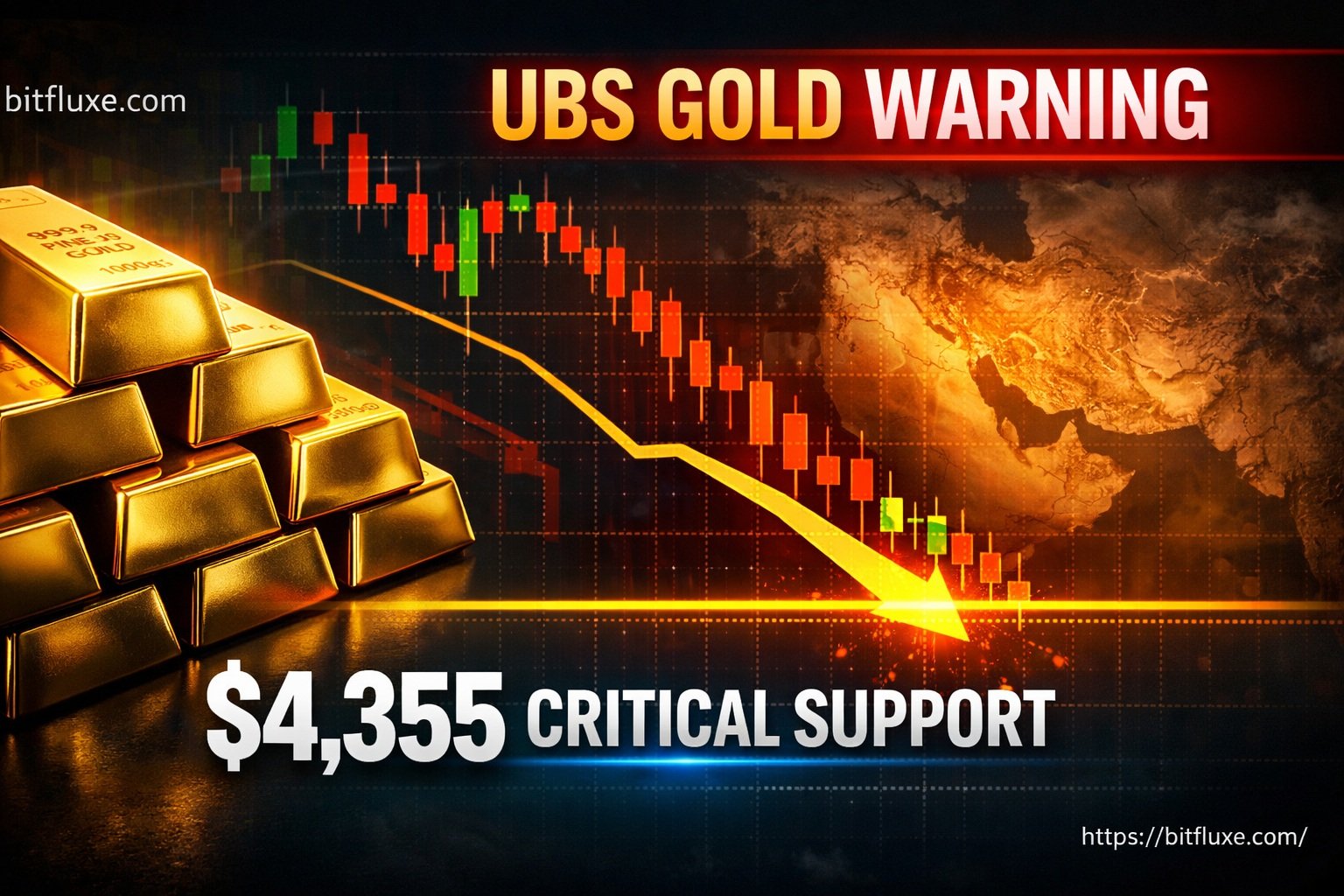
In technical analysis, certain price points act as psychological barriers. For the 2026 gold market, $4,355 is that line in the sand. Institutional traders use this level to determine if the bullish trend is still intact. If spot gold manages to hold above this mark, it confirms a consolidation phase, suggesting that the market is merely catching its breath before the next leg up. However, if selling pressure intensifies, this level could turn into a “falling knife,” leading to a rapid liquidation toward the $4,200 zone. As XAU/USD tests the $4,355 support, investors can track real-time movements on our Live Gold and Bitcoin Price USA dashboard.”
Imagine a Wall Street hedge fund manager looking at their terminal. They see gold volatility decreasing and the Relative Strength Index (RSI) moving out of the overbought territory. For many, $4,355 represents a “value zone” where they might start accumulating again. For the retail investor in the USA, watching this level is vital for timing IRA contributions or bullion purchases from reputable dealers like APMEX or JM Bullion.
How De-escalation in the Middle East Impacted Safe-Haven Assets
Safe-haven assets thrive on uncertainty. When news of the Iran war potential first broke, capital flowed out of equities and into gold and US Treasuries. Now that diplomats are signaling a “consolidation of peace” or at least a stalemate, that capital is rotating back into risk-on assets. This de-escalation has removed the immediate inflation hedge necessity for many traders, causing a short-term surplus in gold supply on the exchanges.
For an American family looking to protect their wealth preservation strategy, this de-escalation provides a moment of clarity. Historically, gold price trends during conflict follow a “buy the rumor, sell the fact” pattern. The initial shock sends prices soaring, but the reality of a prolonged stalemate often leads to market stabilization. Understanding this geopolitical risk cycle is key to not buying at the absolute peak of a market rally.
Expert Opinion: “The retreat to $4,355 isn’t a sign of weakness, but a sign of a healthy market. No asset moves in a straight line. This consolidation phase allows the moving averages to catch up with the price.” — Financial Strategist at Bitfluxe.
Why Gold is Falling: 3 Main Reasons for the Recent Dip
The recent decline in global gold prices can be attributed to a “triple threat” of economic factors. First, we are seeing massive profit-taking by major institutional investors. After a 20% rally in a single quarter, many funds are mandated to rebalance their portfolios. By selling a portion of their gold holdings, they lock in gains, which naturally increases the liquid supply in the over-the-counter (OTC) market, putting downward pressure on the spot price.
Secondly, the US Dollar Index (DXY) has shown unexpected resilience. Since gold is priced in USD, a stronger greenback makes the metal more expensive for international buyers, reducing global demand. Finally, the Federal Reserve’s hawkish stance on interest rates has increased the opportunity cost of holding a non-yielding asset like gold. When US 10-Year Treasury yields rise, big money often moves toward the guaranteed returns of government bonds rather than the speculative safety of bullion.
Profit Taking by Institutional Investors (Whales)
In the world of precious metals trading, “whales”—such as central banks and massive pension funds—dictate the trend. After the XAU/USD breakout, these entities reached their internal price targets. When a fund in Chicago or London sells 50,000 ounces of gold to rebalance, the market feels it. This institutional selling creates a ceiling that retail buyers struggle to break through without a new fundamental catalyst.
This behavior is typical of a market peak. Whales prefer to sell into strength, meaning they exit their positions while the news is still “scary” but the price is high. For the average American investor, seeing these liquidity sweeps can be discouraging, but it’s a necessary part of the market cycle. It flushes out the “weak hands” and sets the stage for a more sustainable bull market base.
Market Correction: From Overbought Zones to Stability
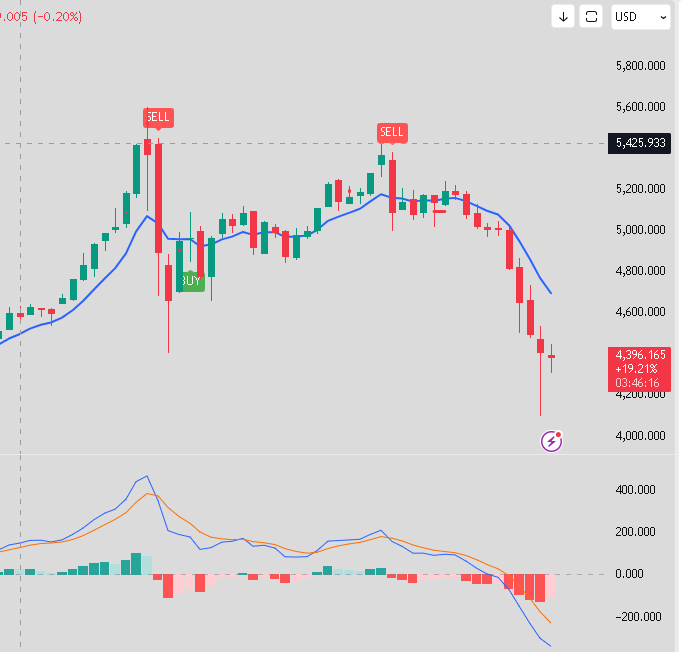
Technically, gold was “screaming” for a correction. Indicators like the Moving Average Convergence Divergence (MACD) were showing bearish divergence for weeks. A market correction is simply the process of an asset returning to its mean valuation. By falling to $4,355, gold is returning to its 50-day moving average, a level where many automated trading algorithms are programmed to start buying again.
Stability is actually good for the long-term investment outlook. Extreme gold volatility makes it difficult for jewelry manufacturers and industrial users to price their products. A consolidation phase near $4,300-$4,400 builds a strong floor. If gold stays at this level for several weeks, it creates a “base of support” that is much harder to break during the next economic crisis.
The UBS Insight: What Does “Consolidation Phase” Mean for You?
When a powerhouse like UBS (Union Bank of Switzerland) flags a consolidation phase, the financial world listens. In their latest commodity report, UBS analysts suggest that the “easy money” in the gold rally has been made. They argue that the market has fully priced in the Iran war risks and is now looking for the next reason to move. For the American taxpayer and investor, this means the era of $100 daily moves might be over for the next few months.
Why UBS Expects Range-Bound Trading in March 2026
Range-bound trading occurs when an asset bounces between a set high and a set low without a clear breakout. UBS predicts that spot gold will likely trade between $4,300 and $4,500 through the spring of 2026. This is because the forces pushing gold up (inflation fears) and the forces pushing it down (high interest rates) are currently in a state of equilibrium.
For a trader in Texas looking at gold futures, this means “scalping” strategies might be more effective than “trend-following” ones. In a consolidation phase, the goal is to buy near the support level ($4,355) and sell near the resistance level ($4,500). This environment requires patience and a strict adherence to risk management rules to avoid getting caught in “whipsaw” price movements.
Analyzing the Swiss Bank’s Long-Term Bullish Outlook
Despite the call for a short-term pause, UBS remains structurally bullish on precious metals. They cite global de-dollarization and central bank gold reserves as the primary drivers for 2027 and beyond. The “Swiss view” is that gold is an essential diversification tool for any portfolio. While they expect a pause now, their end-of-year target remains significantly higher than current levels.
For US investors planning for retirement, this “short-term neutral, long-term bullish” stance is a green light to continue Dollar-Cost Averaging (DCA). If you are buying gold for a 10-year horizon, a consolidation phase at $4,355 is just a small blip on a much larger upward trajectory. It’s an opportunity to build a position without the “FOMO” (Fear Of Missing Out) that comes with a vertical price spike.
War Tensions vs. Interest Rates: The Tug of War
The gold price is currently the rope in a tug of war between geopolitics and monetary policy. On one side, the Iran conflict provides a “floor” for the price because investors are afraid of a sudden escalation. On the other side, the Federal Reserve’s “higher for longer” interest rate policy provides a “ceiling.” This conflict is what creates the market volatility we are seeing in the US financial markets today.
Iran Conflict Update: Geopolitical Risk Premium is Fading
As the headlines regarding the Iran war transition from “imminent invasion” to “diplomatic negotiations,” the geopolitical risk premium fades. Investors who bought gold at $4,500 as a “disaster insurance” are now selling those positions because the disaster didn’t happen as quickly as expected. This reduction in safe-haven demand is the primary driver behind the fall to $4,355.
However, history shows that Middle Eastern tensions rarely disappear overnight. Any “hot” update or accidental escalation could instantly reignite the gold rally. American investors must stay informed via real-time news feeds because in a volatility-driven market, the price can move 2% in minutes based on a single tweet or official statement from Washington D.C.
Fed Policy & Interest Rates: The High-Yield Competition
In the USA, the Federal Reserve is gold’s biggest enemy right now. With inflation still lingering above the 2% target, the Fed has been reluctant to cut interest rates. For an investor in Florida, why hold gold that pays 0% interest when a high-yield savings account or a CD (Certificate of Deposit) is paying 5%? This yield competition is a major headwind for the spot gold price.
When real interest rates (interest rates minus inflation) are positive, gold tends to struggle. Currently, the Fed is keeping monetary policy tight, which supports the US Dollar and hurts commodities. However, the moment the Fed hints at a “pivot” or a rate cut due to a slowing US economy, the gold breakout will likely resume with even more force.

Technical Analysis: XAU/USD Key Levels to Watch
To understand where gold is going, we must look at the “map” provided by technical analysis. Professionals don’t guess; they look for confluence—where multiple indicators point to the same conclusion. Currently, the weekly chart for gold shows a classic “bull flag” pattern, but the daily chart is warning of a deeper price correction if $4,355 fails to hold.
The $4,355 Support Zone: What Happens if it Breaks?
If XAU/USD closes below $4,355 on a weekly basis, the next major support level is at $4,280, followed by the psychologically significant $4,000 mark. A break of $4,355 would trigger stop-loss orders for thousands of traders, potentially leading to a “liquidation event.” For American buyers, this would be the time to look for “fire sale” prices on silver and gold coins.“For a city-wise breakdown of 24K and 22K prices, check the latest Gold Rate Today in Pakistan updates.”
On the flip side, a “bounce” from this level would create a double-bottom pattern, a very bullish signal. If we see a strong green candle on the daily chart at this level, it’s a sign that the whales have stepped in to defend the price. For technical traders, this is the highest-probability entry point for a long position with a target back toward $4,600.
Immediate Resistance Levels for Gold This Week
If gold starts to recover, it will face resistance at $4,420 and $4,485. These are the levels where sellers previously stepped in. To confirm a true trend reversal, gold needs to clear these hurdles on high trading volume. Without volume, any rally is likely just a “dead cat bounce”—a temporary recovery before another drop.
| Level Type | Price Point (USD) | Market Significance |
| Major Resistance | $4,600 | All-time high / Psychological cap |
| Minor Resistance | $4,485 | Recent swing high / Selling zone |
| Current Support | $4,355 | UBS Consolidation Pivot |
| Major Support | $4,200 | 200-Day Moving Average / Buy Zone |
[Comparison Table] Gold vs. Major Assets Performance (March 2026)
To give US investors perspective, it’s important to see how gold is performing relative to other financial instruments. While gold has cooled off, other assets like Bitcoin or the S&P 500 are dealing with their own volatility issues.
| Asset Class | MTD Performance | Volatility Rating | Primary Driver |
| Spot Gold (XAU) | -2.4% | Medium | Iran War / UBS Report |
| Bitcoin (BTC) | +5.1% | High | Halving Cycle / ETF Inflows |
| S&P 500 Index | +1.2% | Low | Corporate Earnings |
| US Dollar (DXY) | +0.8% | Low | Fed Interest Rates |
| US 10Y Treasury | +3.5% (Yield) | Medium | Inflation Expectations |
[Investor Strategy] Buy Gold Now or Wait for a Bigger Correction?
If you are an investor in Chicago or Los Angeles, your strategy depends on your time horizon. Short-term traders should wait for a confirmed “bounce” from $4,355 before entering. However, for long-term wealth preservation, the current consolidation phase is a gift. It allows you to acquire hard assets without the high premiums associated with a “panic buy.”
The “New York Strategy”: Dollar-Cost Averaging
Instead of trying to “time the bottom,” many successful New York investors use Dollar-Cost Averaging (DCA). This involves buying a fixed dollar amount of gold (e.g., $500) every month, regardless of the price. In a consolidation phase, this strategy is incredibly effective because you end up buying more gold when prices are low and less when they are high, lowering your average cost basis over time.
💡 Pro-Tip: When buying physical gold in the USA, ensure you are aware of IRS reporting requirements. Sales of certain gold coins (like Krugerrands) over a specific threshold may require a 1099-B form. Always consult with a tax professional regarding your capital gains strategy.
Storing Your Wealth: US Vaulting Standards
If you are buying significant amounts of bullion during this price correction, don’t keep it under your mattress. Use COMEX-approved vaults or third-party depositories that offer all-risk insurance. In the USA, companies like Brink’s or Delaware Depository provide the highest level of security. For IRA investors, remember that the IRS requires your gold to be held by an approved custodian; you cannot take personal possession of IRA gold.
FAQs – People Also Ask (Gold Rate USA & Global)
Why is the gold price falling in the USA today?
The price is falling primarily due to profit-taking by institutional investors and a cooling of geopolitical tensions in the Middle East. Additionally, a steady US Dollar (DXY) and high Treasury yields are making gold less attractive in the short term.
What is the impact of the Iran war on my gold investment?
The Iran war acts as a “geopolitical floor.” While the fear is high, the price stays elevated. As fear subsides (the consolidation phase), the price drops. However, any new escalation would likely send gold toward $5,000.
Should I sell my gold or hold it in 2026?
Most experts suggest holding gold as a core part of a diversified portfolio. Gold is an inflation hedge and a protection against currency devaluation. Selling during a consolidation phase often leads to missing the next market breakout.
Does the UBS report mean gold won’t rise anymore?
No. UBS is simply forecasting a short-term pause. Their long-term outlook remains bullish, suggesting that this is a healthy market cycle rather than a permanent trend change.
Final Thoughts: Navigating the 2026 Gold Market
The gold rate forecast for the remainder of 2026 is one of “cautious optimism.” While the UBS consolidation phase might feel like a setback, it is a necessary part of a sustainable bull market. By testing the $4,355 support level, the market is building the foundation for its next major move. For American investors, the key is to look past the daily market volatility and focus on the fundamental reasons for owning gold: inflation protection, wealth preservation, and geopolitical insurance.
Whether you are a seasoned commodities trader or a first-time buyer in the United States, stay disciplined. Don’t let the “noise” of a price correction distract you from your long-term financial goals. Watch the Federal Reserve, keep an eye on the DXY, and use this consolidation phase to refine your investment strategy.

Hi, I’mBaber! I’m a blogger and crypto enthusiast dedicated to uncovering the best trading key levels in the financial markets. My mission is to break down advanced technical analysis tools into easy-to-follow guides for traders worldwide. When I’m not analyzing charts on TradingView, I’m busy researching the latest in blockchain security and SEO strategy to bring you the most accurate market updates.
View full details on our Terms and Conditions page.