BITCOIN VS GOLD 2010–2026 WHICH MADE MORE PROFIT?
Bitcoin vs Gold Calculator: See Your Profit (2010–2026)
Bitcoin vs Gold Investment Calculator (2010–2026)
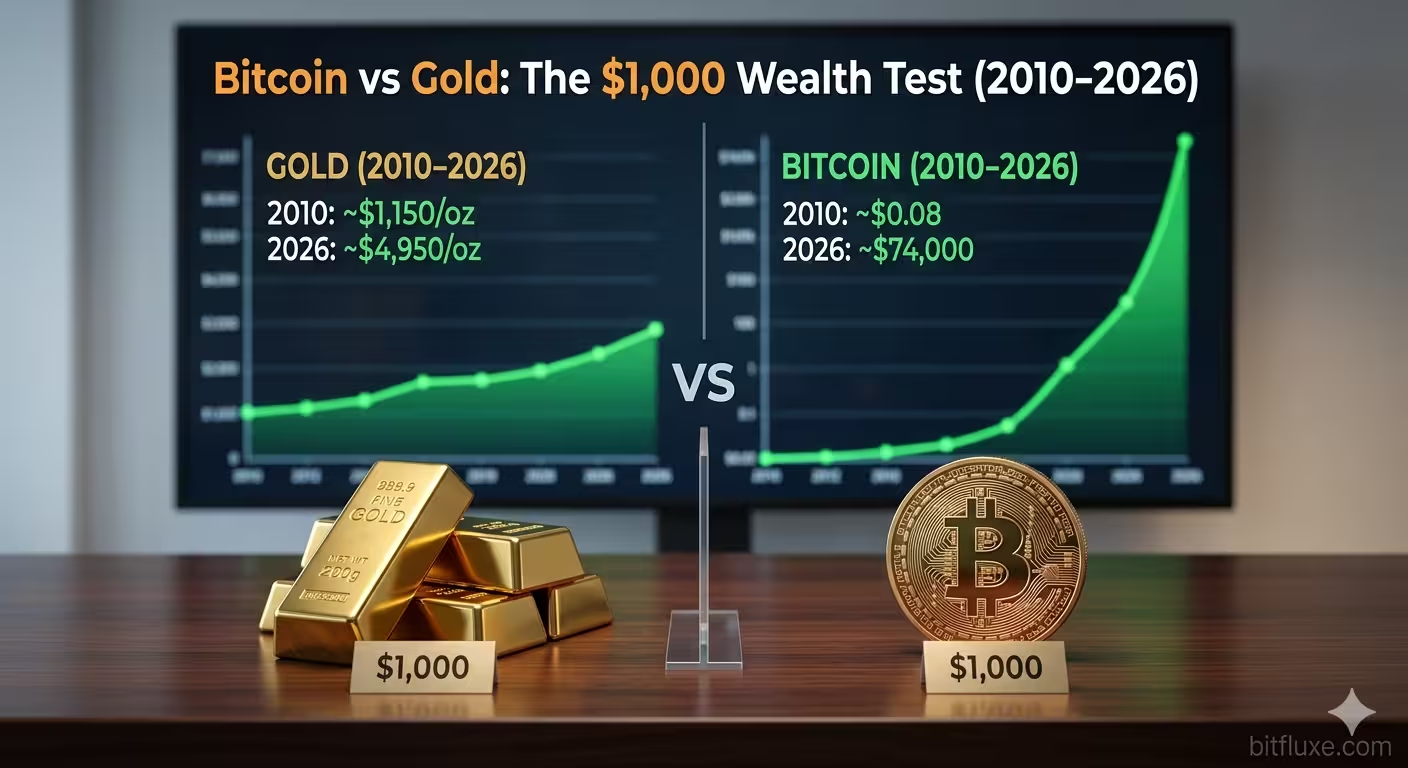
If you had invested just $1,000 in Bitcoin or Gold in 2010, which one would have made you rich by 2026? The answer might shock you. is the ultimate challenge for modern American investors seeking long-term security. While physical gold has served as a legendary store of value for centuries, the emergence of Bitcoin has introduced a disruptive digital scarcity that reshaped Wall Street.
Since 2010, the financial landscape has shifted dramatically, forcing a comparison between tangible bars and decentralized code. By analyzing historical ROI and the U.S. Dollar Index (DXY), we can see how a simple $1,000 allocation transformed differently across both assets. As institutional adoption accelerates through 2026, understanding which hedge truly protects your purchasing power against inflation is essential for building a diversified portfolio. Updated March 2026 with latest Bitcoin and Gold data
Bitcoin vs Gold 2010–2026 (Quick Answer):
- Bitcoin: Highest profit 🚀
- Gold: Stable & safe 🪙
- Winner: Bitcoin (ROI)
- Best strategy: Both
The Battle of Scarcity: Digital vs. Physical Store of Value in 2026
The concept of “Hard Money” is rooted in absolute scarcity. For centuries, Gold earned its status because its annual mining supply increases by a predictable, low percentage. In 2026, however, the narrative has shifted toward algorithmic scarcity. Bitcoin’s fixed supply of 21 million coins creates a mathematical certainty that physical commodities simply cannot match. If you want to dive deeper into how digital assets compare, check out our USDT vs USDC 2026 Safety Guide to see which stablecoin holds more trust.” That $1,000 Bitcoin investment could have turned into over $100 million by 2026.
Defining the Hard Money Standard: Why 2026 is a Turning Point
In the current US financial market, the definition of a hedge against inflation has been redefined by the Stock-to-Flow model. While Gold remains a physical necessity for electronics and jewelry, its role as a primary reserve asset is being challenged by digital portability. American investors now value the ability to move millions in capital across borders instantly, a feat impossible with heavy gold bars.
Our Comparison: While Bitcoin continues to offer high-growth potential in 2026, Gold remains the go-to asset for stability during economic uncertainty. Most modern investors now prefer a diversified split (e.g., 70% Crypto / 30% Gold) depending on their risk appetite.”
The year 2026 marks a turning point because we are seeing the first sustained period where institutional adoption via Spot Bitcoin ETFs has stabilized BTC’s volatility. This “maturation” of the asset class means that the risk-adjusted returns are becoming more comparable to traditional precious metals, making the choice between them a matter of portfolio strategy rather than pure speculation.
The Inflation Flip: Why Bitcoin’s Issuance is now lower than Gold’s Mining Rate
A critical technical milestone occurred recently: Bitcoin’s annual inflation rate has officially dropped below that of Gold. Following the previous halving events, the amount of new BTC entering circulation is now approximately 0.8%, whereas global gold production consistently adds about 1.5% to 2% to the total supply every year.
For a New York-based hedge fund or a retail investor in California, this “Inflation Flip” is a massive fundamental signal. It means that, for the first time in history, there is a functional asset more scarce than Gold. This supply-side shock is a primary driver for those looking to protect their purchasing power against the long-term devaluation of the USD.
Expert Opinion: “The 2026 market has proven that scarcity is no longer just physical. In a world of fiat debasement, the asset with the most transparent and immutable supply schedule wins the long game.” — Bitfluxe Analysis Team
Historical Performance (2010–2026): A Tale of Two Diversifications
To understand the future, we must look at the historical price action. In 2010, Bitcoin was a niche experiment trading for pennies, while Gold was recovering from the 2008 financial crisis, trading around $1,100 to $1,200 per ounce. The journey since then has been a masterclass in exponential growth versus steady wealth preservation.
| Asset | Current (Mar 2026) | Q4 2026 Target (Avg) | Bull Case (High) | Analyst Sentiment |
| Gold (XAU) | ~$4,735 | **$5,055** | $5,400 | Strong Bullish (Central Banks) |
| Bitcoin (BTC) | ~$73,000 | $120,000 | $175,000 | Constructive (Institutional) |
| DXY Index | ~98.2 | 95.5 | 100.3 | Bearish (Fed Rate Cuts) |
The 2010 Entry Point: What if you bought $1,000 of Gold vs. Bitcoin?
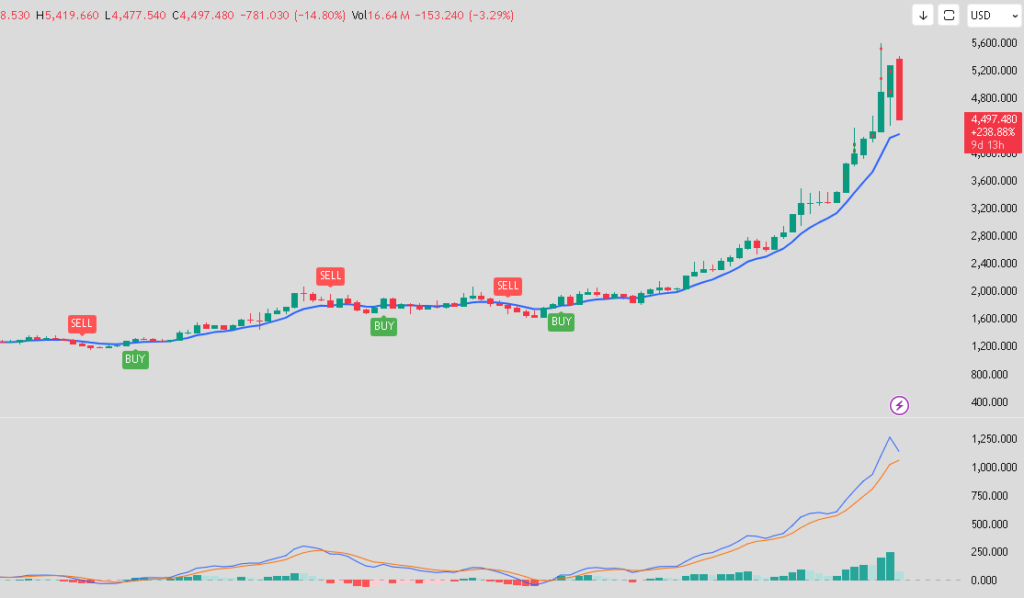
Imagine an investor in Chicago who put $1,000 into Gold in January 2010. They would have purchased roughly 0.9 ounces. By March 2026, with Gold testing the $5,000 threshold, that investment would be worth approximately $4,500. This represents a solid, reliable return that outpaced the Consumer Price Index (CPI), successfully preserving the investor’s wealth.
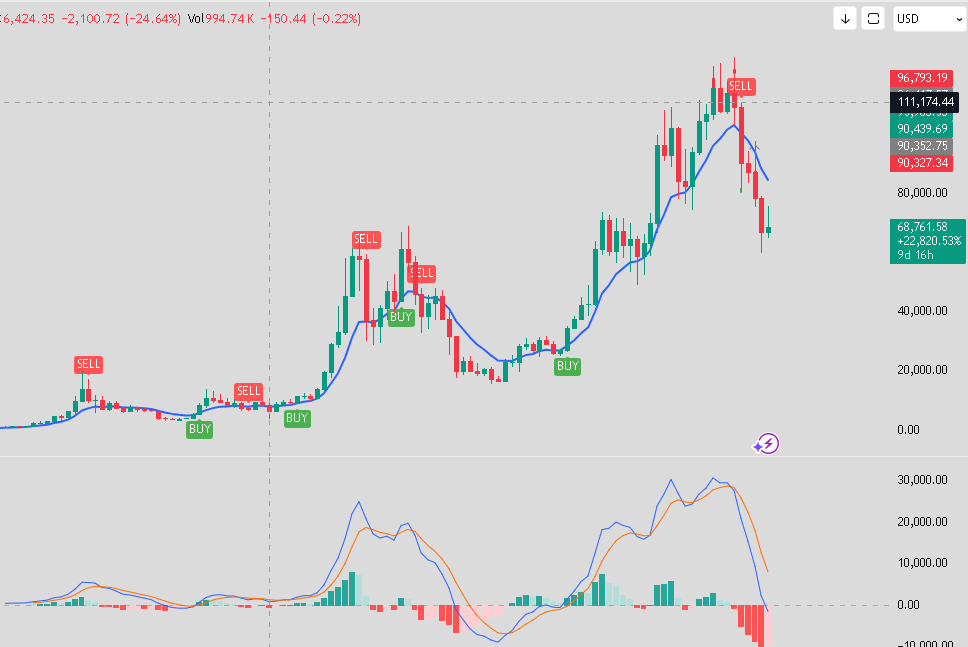
Now, consider the alternative. In 2010, $1,000 could have bought thousands of Bitcoins when the price was under $0.10. Even if that investor bought later in the year at $0.50, they would own 2,000 BTC. At today’s 2026 prices (ranging between $70,000 and $80,000), that $1,000 investment would have transformed into an astronomical $140 million+. While this is an extreme “what if” scenario, it highlights Bitcoin’s role as the greatest wealth generator of the 21st century.

2024–2026 Post-Halving Era: Analyzing the Supply Shock Impact
The period between 2024 and 2026 has been defined by the “Supply Crunch.” Following the 2024 halving, the daily production of Bitcoin was cut in half, just as Wall Street giants like BlackRock and Fidelity began aggressive ETF accumulation. This created a liquidity gap that propelled the price toward new all-time highs (ATH).
During this same period, Gold didn’t sit still. It saw a massive resurgence as Central Banks in Asia and Europe aggressively diversified away from the U.S. Treasury bonds. For the American investor, this meant that both assets performed well, but for different reasons: Gold moved on geopolitical tension, while Bitcoin moved on technological adoption and monetary scarcity.
Interactive Comparison Table: Profitability & ROI
| Metric (2010 – 2026) | Gold (XAU) | Bitcoin (BTC) |
| Starting Price (2010) | ~$1,150 / oz | ~$0.08 – $0.50 |
| Current Price (2026) | ~$4,950 / oz | ~$74,000 |
| Total ROI | ~330% | ~14,000,000%+ |
| Max Drawdown | ~45% | ~85% |
| Annualized Volatility | 15% – 20% | 50% – 80% |
| IRS Tax Status | Collectible (Up to 28%) | Capital Asset (0-20%) |
| Primary Use Case | Crisis Hedge | Growth & Scarcity |
The Information Gain Section: Why 2026 is Different
The old mantra was “Gold for safety, Bitcoin for gambling.” In 2026, that narrative is dead. The US regulatory framework has matured, with the SEC and CFTC providing much-needed clarity. This has allowed pension funds and 401(k) providers to include BTC in their diversified portfolios.

The DXY Correlation: How the US Dollar Index is forcing investors into “Hard Assets”
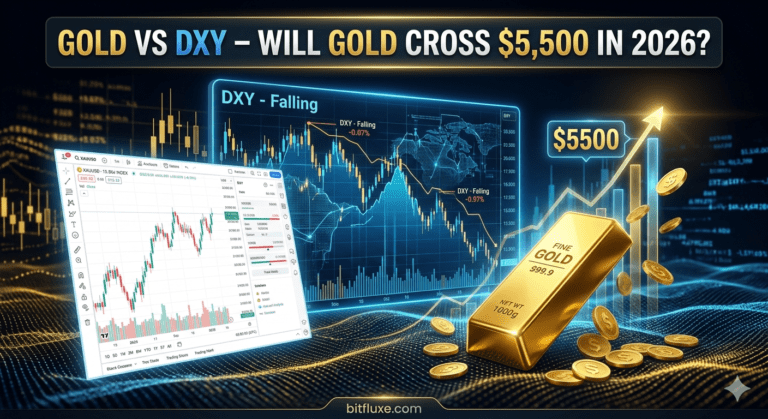
The US Dollar Index (DXY) measures the strength of the greenback against a basket of currencies. Traditionally, when the DXY is strong, Gold and BTC struggle. However, in 2026, we are witnessing a decoupling. Even during periods of Dollar strength, hard assets are rising because investors are worried about the total US National Debt, which has surged past $34 trillion.”The US Dollar Index’s current trajectory is a major driver here; see our full Gold vs DXY 2026 Analysis for more on the $5,500 target.”
This shift is critical for domestic investors. Holding cash in a high-yield savings account might offer 4-5% interest, but if the purchasing power of the dollar drops by 7% due to the expansion of the M2 money supply, you are effectively losing money. Both Gold and Bitcoin serve as the “exit ramp” from this inflationary trap.
Institutional Adoption vs. Self-Custody: The Rise of Bitcoin ETFs
In 2026, the way Americans buy these assets has changed. Gold vaulting services in Delaware or Texas are still popular for physical enthusiasts, but the majority of new capital is flowing into Spot ETFs. For Bitcoin, this has meant billions of dollars in inflows from retail investors who prefer the safety of a regulated brokerage over managing their own private keys.
However, the “Not your keys, not your coins” philosophy still thrives. Many high-net-worth individuals in the US are choosing self-custody for Bitcoin and physical home storage for Gold. This dual-layered approach ensures that even in a cyber-attack or a banking holiday, their wealth remains accessible and outside the traditional financial system.
Pro-Tip: The 2026 “Golden-Bit” Strategy (Portfolio Balancing)
[Pro-Tip Box]: For a balanced US-based portfolio in 2026, experts recommend the 80/10/10 Rule: 80% traditional equities/bonds, 10% Physical Gold, and 10% Bitcoin. This “Golden-Bit” strategy uses Gold to dampen market volatility while using Bitcoin as a volatility engine to capture massive upside. This balance historically yields a higher Sharpe Ratio than holding either asset alone.
Future Outlook: Will Gold hit $10,000 or Bitcoin $250,000?
Looking toward 2030, the macro-forecast remains bullish for both. As Central Banks continue to print money to service debt, the nominal price of limited-supply assets must rise. Many analysts believe Gold is on a trajectory to $10,000 as it becomes the primary reserve for the “Global South.” As precious metals test new highs, our Detailed Gold Price Analysis at $5,000 provides a technical roadmap for the coming months.”
For Bitcoin, the path to $250,000 is paved by corporate balance sheet adoption. If even 5% of the S&P 500 companies follow the MicroStrategy model and convert their cash reserves into BTC, the resulting liquidity squeeze could send prices to levels previously thought impossible.
FAQ
Is Bitcoin safer than Gold in a recession?
In a liquidity crisis, everything often sells off initially. However, Gold typically recovers faster as a defensive play, while Bitcoin recovers as a liquitive growth play. In 2026, both are considered essential for a “recession-proof” plan.
Can I pay Zakat on Bitcoin like I do on Gold?
Yes. Under modern Islamic Finance rulings in 2026, Bitcoin is treated as Mal (wealth). If it meets the Nisab threshold and has been held for a lunar year, Zakat (2.5%) is applicable, similar to Gold holdings.
Which asset is better for a 10-year retirement plan?
For long-term wealth accumulation, Bitcoin has historically outperformed every other asset class. For wealth preservation and legacy planning, Physical Gold remains the gold standard (pun intended). A mix of both is usually the most prudent path for a US retiree.
Final Verdict: The Winner for the 2026 Global Economy
If we judge strictly by profitability, Bitcoin is the clear winner. No other asset has provided the same level of generational wealth in such a short period. However, “profit” isn’t just about the numbers on a screen; it’s about peace of mind.
For the American investor, the winner isn’t one or the other—it is the combination. Gold provides the floor, and Bitcoin provides the ceiling. By holding both, you are protected against currency collapse, geopolitical war, and technological shifts. As we move deeper into 2026, the smartest move is to stop choosing sides and start building a multi-asset fortress.

Hi, I’mBaber! I’m a blogger and crypto enthusiast dedicated to uncovering the best trading key levels in the financial markets. My mission is to break down advanced technical analysis tools into easy-to-follow guides for traders worldwide. When I’m not analyzing charts on TradingView, I’m busy researching the latest in blockchain security and SEO strategy to bring you the most accurate market updates.
View full details on our Terms and Conditions page.